Supporting Value Chains
This page gathers the Supporting Value Chains section of Dr. Tinsley’s Smallholder Agriculture site in one place. Each topic opens with a short introduction; the full discussion is in the Read More panel beneath it. Use the list below to jump to a topic.
- Producer Organizations and Cooperatives
- Envisioned Competitive Advantage for Cooperatives
- Taxpayers Expectations
- Loss of Competitive Advantage
- Financial Transparency
- Cooperatives Regulatory Contribution
- Reconciliation with Private Service Providers
- Smallholder Empowerment
- Perpetuating Cooperatives
- Information Requested (incl. USAID Inspector General correspondence)
- Vulnerability to Class Action Litigation
- Financial Management Strategy
- Value Chain for High Valued Crops
Producer Organizations and Cooperatives: Is There a Competitive Adantage?
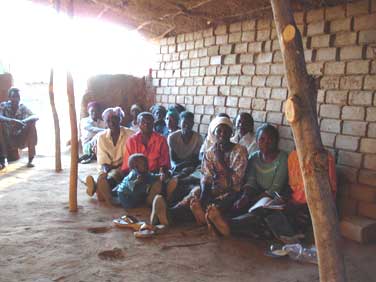
With the overall Financially-Suppressed Economies in which most smallholder producers operate, the impoverished general public spends most of their income or crop production just to meet their subsistence needs. The result is a general public with limited buying power which exerts substantial downward pressure on Consumer Prices so, that for goods produced in-country, the consumer costs are only 1/3rd to 1/5th of the USA prices. Under such conditions it is essential that the costs of doing business be kept to a very minimum. Since most rural poverty alleviation development projects are funneled through producer organizations and cooperatives as mandated in the original request for proposals, the question is, “in working with producer organizations as a business model to provide necessary support services, is it possible to keep the managerial overhead costs below the profit margins of the competing private traders, as well as below the financial benefits obtained from bulking production for sale and consolidating inputs for purchase, and make the services equally as convenient as the cash on delivery systems used by the private traders”? If not, then funneling development through producer organizations could unintentionally be providing a major disservice to the smallholder producers even forcing them deeper into poverty. Also, often the producers’ organizations are interested in providing some highly desirable social services beyond the business services. However, how often are these social service dependents on the producers’ organization being a sufficiently profitable business to fund the social activities, as well as needing a substantial majority of the beneficiaries actively participating to prevent extensive freeloading on the social benefits by non-members.
-
Read More About Producer Organizations and Cooperatives
The funneling of assistance to smallholder producers through cooperatives has now been institutionalized for over three decades. The expectation is that by consolidating produce for bulk sale they can demand a higher price when selling goods, or similar by consolidating input orders they can get a volume discount. While these benefits are available and highly promoted, they are rarely quantified. Given the financially suppressed economy mention above and the limited buying power of the general population putting downward pressure on consumer prices how much can these unquantified financial bulking/consolidating benefits be? What would be reasonable? Five percent, 10%, could it be as high as the 35% the Central Growers Association (PDF) in Kitwe, Zambia mention as their overhead costs. With that overhead cost the Association, which has monopoly control over the tobacco auction floor, and that is all the business they receive. All other crops produced by their members were side-sold to private traders in contradiction to the association by-laws.
While a producer organization can derive some financial benefits for bulking sales and consolidating input purchases, there are administrative costs associated with obtaining these benefits. Most of this would be associated with hiring external staff including general managers, accountants, warehouse managers, and casual labors as well as maintain warehouse storage facilities, to hold the bulked goods until sold, housing for externally hired staff, operating and maintaining any vehicles, and including adsorbing any spillage or pilferage loses. Such cost must be substantially lower than the unquantified financial benefits to still allow the promised dividend payments at the end of the season, if the cooperative is to be competitive and sustainable beyond donor support as normally specified in the project documents, and for which the failure to continue beyond external assistance would constitute non-compliance by the implementing facilitating contractor and subject the contractor to possible litigation to refund the money squandered on projects with predictably high potential for failure. Is this realistic in the overall economic environment described above that could severely limited financial benefits for bulking and consolidating? If the administrative overhead costs are greater than the unquantified benefits what are the management options to balance the budget? Is this only possibility reducing what is paid to the farmer, lowering their limited profit margins, and forcing them deeper into poverty?
The need for producers’ organizations is done under the assumption, normally put forth without verification, that private traders were exploitative, and thus a cooperative would provide a competitive financial benefit to the smallholders. However, it appears that no one has taken the time to determine if, in the context of developing countries’ overall financial and economic business environment, including the possible Financial Management Strategy, that emphasis retaining assets in kind, there is a competitive advantage in working through cooperatives. Or is the overall financially-suppressed economy with the limited the buying power of most of the population sufficient to prevent excessive exploitation by private traders? Perhaps what has been decreed to be a predator-prey relationship is more a Symbiotic relationship.
In the spring of 2004, DFID, the UK international development agency, sponsored an E-forum to discuss how it could best assist the agriculture sector of developing countries. There were over 500 individuals subscribed to the forum from all around the world. The included donors and donor country-based personnel, donor field staff and host country professional staff. Many individual subscribers had 30 years or more of experience in assisting developing countries. Thirty years typically represents a full professional career. Three inquiries into this forum specifically seeking comparative studies of the cost of conducting business through cooperatives vs. private traders provided zero responses. By default, the implication is that no studies have been conducted and thus there is no solid evidence that cooperatives are providing a sustainable financial benefit to their members. It does appear that cooperatives have problems with members “side selling” the bulk of their goods and services to pirate or “coyote” traders, as well as difficulty in being sustained without external facilitation. Since this E-forum continued probing into various forums, webinars, etc. continue to get no replies and implying no such comparative business studies have been made, or if made the results are too embarrassing to be published. The producer organizations are simply declared to be competitive and advantageous for the smallholder farmers!!
This then leaves the question, just on pure historic probabilities over the past 30+ years of relying on producer organizations to funnel assistance to smallholders, what are the chances of a producer organization, organized by a development project for poverty alleviation of smallholder farmers, surviving for two years beyond after eternal financial support and technical facilitation have ended. Would <5% be a reasonable assumption?
In the absence of such studies or the publication of such studies, it is possible that funneling development assistance through producer organizations may unintentionally impose on the smallholder beneficiaries the:
- Most expensive,
- Least convenient, and
- Most prone to financial irregularities
support service available.
When this happens smallholders simply exercise their rights as individual entrepreneurs to seek the support services they feel are providing them the best competitive advantage, and side sell most of their produce to the private traders. What does side selling really represent, a breach of contract on the part of the beneficiary, or an astute business decision to avoid what might be a horrendous business model. The side selling reduces the funds available for social benefits to the community as envisioned in the Fair-Trade Coffee cooperatives, and the social tax levied on fair trade commodities. On close analysis the market volume actually going through the producer organization is frequently little more than in-kind loan repayments with the bulk of business being side-sold.
As one reviews the unverified vilification of private service providers to justification the emphasis on producer organizations to assist smallholder beneficiaries, one must wonder what is the source? Is it the host government and its civil officers, who may have a vested professional interest in promoting public sector institutions as well as potential for personal benefits to be derived from facilitating farmers participating in at least state sponsored producer organizations? This could easily be receiving gratuities for approving purchase of such deliberating scarce inputs like fertilizer and certified seed. However, isn’t such unsubstantiated vilification slander and subject to litigation. If development personal repeat this slander as fact or include it in project documentation as a justification for use of producer organizations, are they not equally Liable for its Accuracy as well as any funds for projects approved and implemented based on this slander when the projects fail?
There are several issues associated with working with farmer organizations that become too long to be effectively included in a single web page and thus better discussed on separate pages along with some specific case study examples. These are:
- Competitive Advantage,
- Financial Transparency,
- Regulatory Impact,
- Reconciliation with Private Traders,
- Smallholder Empowerment.
Bottom Line
The bottom line is that while, from a sociology perspective, producer organizations have a lot of academic and conceptual appeal from donors, and those development workers assisting them can take great pleasure in their work with smallholder-based producer organizations. However, from a business perspective, which is the perspective most smallholders will be mainly concerned with, if producer organizations are not economically competitive with competing private traders providing similar services, they cannot be sustained beyond external donor facilitation. When this happens, members will abandon them and revert to obtaining their services from the private traders as the default providers. In reviewing the business model of the cooperative system with a little effort it is possible to quickly list up to 14 Point of Concern where the producer organizations model, as used in development projects, will lose the envisioned competitive advantage to the competing often vilified private traders. This should be sufficient to offset any negotiated advantage for group bulking of inputs or produce. When this happens the development producer organizations will become mostly a source for publicity of donors’ good intentions while providing little, if any, sustainable development. However, by this time the donor representatives will have left, happily promoting their accomplishments but fully unaware of how quickly their efforts collapsed once they left.
Those deriving pleasure from working with smallholders through producer organizations must consider if the enjoyment they are experiencing is because of the producer organizations or simply from assisting smallholders. If the latter, could they have an equally enjoyable experience, if not more enjoyable, working directly with smallholders and avoid the frustration of cooperatives and goods diverted to the competing private traders. This could include enhancing the operational resources available to smallholder to more expediently manage their lands with access to Private Contract Mechanization, or other means to Reduce the Drudgery of smallholder farm life.
Unfortunately, the emphasis on cooperatives and producer organizations as the only business model for funneling assistance to smallholder has been severely caught up in the Development Hierarchy that stipulates working with cooperatives in the RFP and virtually mandates more promotional, appeasement orientated than objective reporting to assure continued funding and institutionalizes cooperatives into the Development Process well beyond their overall effectiveness in assisting with the poverty alleviation of smallholders and potential for pushing the beneficiaries deeper into poverty. Some of this can be through some Deceptive Bordering on Dishonest reporting. Such reporting will accurately discuss the limited positive contributions the programs have made while overlooking such items:
- the percent overall beneficiary pool that are actively participating,
- the percent of produce being side sold to the competing private traders,
- the comparative costs of doing business of the cooperative vs. the competing private traders,
- payment or projected payment of promised dividends, and
- overall potential for sustaining the cooperative without donor facilitation.
It could also involve some promotional accounting that stops at cooperative and fails to extend the accounting to the farm gate by excluding the overhead costs of operating the cooperative, or surcharges and handling fees on materials handled. This effectively allocates the cooperative overhead costs as a financial benefit to the farmers they will never see. Meanwhile, vilifying the profits of the private trades, which are reported to the farm gate. Not a valid objective comparison. What are the possibility of such promotional reporting resulting in Major Liabilities & Class Action Litigation for both slandering the private trader and misrepresenting the success of the programs?
Unfortunately, the specification of producer organizations in RFPs implies the mechanism for assisting the smallholders is more important than the effectiveness of the assistance provided. This then implies a less than sincere effort to assist the smallholders.
There is a real need to follow-up on donor promoted producer organizations two years after all donor facilitation ends. This would include at least two agriculture cycles and enough time to see if the producer organizations have a potential for long term sustainability and what forms they may have evolved into to make them more sustainable.
Cooperatives in the USA
It might be interesting to note the role cooperatives play in the USA and possible other developed countries. In the USA cooperatives have been around for a century or more and when created made some major contributions to making certain farmers received a fair return on their crops etc. However, as the private providers became more competitive the role of cooperatives declined until today they average only 30% and decline market share for agriculture commodities they handle with only the dairy cooperatives having a majority market share. However, cooperatives remain highly promoted by the USDA and various colleges of agriculture that make up the Land Grant University System. The promotion is based on the social desirable member ownership, participatory management, and profit sharing dividends, but usually not their competitive advantage in providing the intended support services. It is assumed that because of the ownership, management, and promised dividends the competitive advantage will follow. In most cases this competitive advantage may not be realized, as often cooperatives are not the cheapest source of inputs for farmers particularly, non-members, nor provide the best return on marketed produce. What advantage
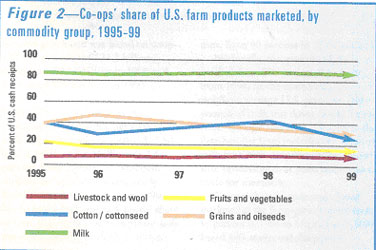 cooperatives have may come primarily from the dividends distributed to members at the end of the financial year, sort of a lay-away savings plan of undetermined value. This lack of competitive advantage may largely account for the limited 30% and declining market share. It should also be noted that the USDA, the federal government department responsible for promoting and assisting cooperatives, is no longer tracking the membership or market share, and has no plans to resume. The Latest Data (PDF)is that shown in the figure and is now approaching 25 years old.
The bankruptcy debacle of Farmland Industries should also be noted in a review of the agriculture cooperative system in the USA. Farmland was a conglomerate of agriculture cooperatives and thus the biggest cooperative entity in the USA. It attempted to do a value chain vertical integration from producer to consumer similar to what many development projects are currently attempting. The result was eventually the total collapse of the enterprise. The brand name continues to exist, but the surviving divisions were bought out by private corporations and are no longer part of the cooperative system. Those working on value chain projects should take careful note to make certain the added sustainable overhead costs for moving up the value chain does not exceed the benefits to the farmers. If so the value chain will suffer the same fate as Farmland once the donor funding and external facilitation ends.
Anyone working in close association with farmer organizations and wish to follow-up on this webpage are welcome to respond to the Request for Information questionnaire, and send me the results.
Last Revised: 28 August 2018
Envisioned Competitive Advantage For Cooperatives?
While the farmer cooperative business model has a high degree of social desirability and is envisioned to provide the farmer members a better return, mostly by bulking produce to command a better price for volume sales, as well as large purchases of inputs. The question becomes can these bulking benefits to transferred to the members or will they be consumed in overhead costs and operational conveniences needed to obtain them. There are really four concerns.
-
Read More About Envisioned Competitive Advantage For Cooperatives?
Direct Financial Competitiveness: Conceptually cooperatives could lose their anticipated competitive advantage over private traders if their overhead costs exceed the profit margins of the private traders. This can result because there are substantial extra administrative processes associated with operating a cooperative that private traders avoid. Most of this would be associated with the accounting needs required to maintain individual accounts mostly for keeping track of preorder and prepaid inputs as well as accepting produce on consignment. This is in comparison to the simple revolving fund accounting, working from a single simple notebook, employed by most family-run, village-based small enterprises. This extra time and effort has a financial cost that must be recovered in the overhead, surcharges or handling fees the organizations must place on their members in order to conduct business. It could also happen if a cooperative attempts to provide social services such as extension education, health clinics and schools. The cost of these community services must come from the cooperatives revenues. Unfortunately, administrative costs tend to be grossly underestimated and underappreciated in planning any business enterprise.
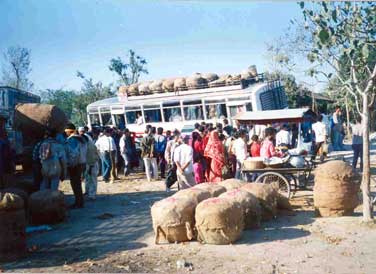
This can be illustrated with the following simplified graph and abstract example. Assuming both the private trader and cooperative are providing farm inputs to the community or marketing a similar commodity. Both will need nearly the same capital to purchase the inputs from a wholesale supplier to take advantage of any volume discounts or purchase produce. However, the cooperative may have obtained some pre-commitments on the inputs or accepted the produce on consignment, so the cooperative’s actual cash flow may be somewhat different time from the private trader. They will then both perform similar managerial functions with possible similar costs, such as transporting the inputs from the wholesale warehouse to the storage facility they have in the community. However, if donor funding has provided the cooperative a truck and an individual warehouse facility, and the private traders are operating with public transportation, such as the roof carrier on a rickety bus as shown, or consolidated several traders goods in one truck, and store goods in a corner of their homes, the private traders may have a substantial cost saving which would increase the private traders’ competitive advantage. They will also have similar time and effort in distributing the inputs
In repacking pesticides or other inputs to more effectively accommodate the farmers’ needs, do not forget the tragedy of the Philippines several years ago, when a white power pesticide was stored in an unmarked paper bag near some wheat flour. The result was someone mistaking the pesticide for wheat flour in making a cassava snack to sell to school children during a class break. The result was many deaths of children with additional more being hospitalized.
to the community members. This would include dividing imported vegetable seeds obtained in 1 kg cans into 50 or 100 g packets or dividing liter bottles of pesticides into 1/8-liter bottles, without the label with directions and warning icons, but consistent with what the individual farmers’ need for backpack sprayers. Some of this input repackaging could be multi-tasked while waiting for customers or members to come in and collect their goods. These are all simply the costs of providing the needed service to the community. This also includes any hired clerical or casual labor to manage the store or move the goods in and out of the warehouse.
On top of this, the private traders have a mark-up that effectively provides a salary for them and their family and absorbs any losses that are encountered from spilled goods, broken bags, spoilage, etc.
The cooperatives now have some additional time and effort for account management. They must review the individual member accounts and credit them with inputs obtained and perhaps provide receipts for consigned goods, etc. to keep track of what has been either delivered or received. There are costs associated with this. It may be possible to bury these costs from the cooperative accounting system by having a member in charge of this on volunteer basis. However, it is a big thankless hassle for that member. Thus, what happens if they were not able to purchase all the inputs desired from the wholesale dealer because his stock was low? Or perhaps and more likely there was some pilferage or breakage en route back! How would the shortage be prorated over the members? Or would the volunteer manager give priority to his own needs. Given the hassle they are encountering in managing the cooperative would they not have clearly earned the priority as sort of payment for their volunteered time and effort. If this happens too often, what will happen to the rank and file members waiting for inputs? These are some of the additional administrative procedures and legitimate costs associated with managing a cooperative that are not part of private traders’ management activities. For the cooperative to remain financially viable these costs must be covered by overhead, handling fees, or surcharges, etc.
Thus the question is whether the overhead costs and surcharges incurred by a cooperative in managing the individual accounts are more or less than the financial benefits the cooperative obtained for the higher volume transaction or the profit margins of private traders in what remains a Financially Suppressed Economy in which the impoverished public has limited purchase power which in-turn severely limits the potential profit margins?
An example of how a competitive advantage can be financially lost is demonstrated in the experience of Cheetah Ltd. in Zambia.
It is possible with donor support to subsidize the cost of operating a cooperative down to where they can have a competitive advantage over the private traders. If this brings the costs to within the private traders’ profit margins, then it might work. However, if the subsidy brings the costs below the underlying costs of doing business there is no potential for sustaining the cooperative once donor funding ends, and it will collapse shortly after donor funds and facilitation support ends as happened to the Farmapine Cooperative in Ghana. It collapsed within a year after a MSc thesis article promoting it was published. This is one area where the detailed costs of business comparison between the cooperatives and private traders could effectively assist the cooperatives to become more effective in their overall business operations and to reduce their competitive disadvantage, but it is unlikely to provide a competitive advantage as there is just too much additional administrative activity to overcome.
Convenience: Cooperatives and other farmer organizations are normally less convenient than the competing private traders. The need to make advance commitments for inputs including financial arrangements or turn over produce on consignment for future sales and payment is considerably less convenient to the smallholder than simply going to the private trader and paying or receiving cash for the necessary goods. It may also go against a well rationalized out overall Financial Management Strategy the emphasizes retaining assets in kind as long as possible, but requires immediate cash when delivered. Also, the need to consolidate orders in advance of procurement introduces a concern for timing as there will be a desire to delay the consolidation until the last minute to assure all possible orders. It could then become a mad scramble to obtain and distribute the inputs in time to meet the crop needs, which usually have some critical timing components for maximum benefits. Similarly, on the selling side, holding commodities for more favorable prices that occur with time after harvest also can result in substantial post-harvest losses and reduced quality due to molds, other spoilage, rats, weevils, etc. Typically, without expensive fumigation treatment grain can be held for about three generations of grain weevils (2.5 to 3 months) before the weevil population becomes substantial enough to seriously lower quality. The weevils might also be easily removed by re-drying the grain in the sun which will force the weevils to seek the shade under the drying mat, but this is better done on the small quantities in home storage rather than the larger volume in a warehouse. In Madibira after an extensive survey of storage facilitates available in the community, once the crop was in, the farmers, rather than consign it to the cooperative, preferred to store it in their home, often taking up to 50% of the floor space while they waited for the prices to increase with time after harvest, or just the need for cash to pay bills like school fees, or make purchases from the market. This opens the question if farmers need a cooperative to obtain the hire prices associated with time after harvest or can they more easily obtain this through the private traders while storing their crops at home. The introduction of PICS (Purdue Improved Crop Storage) triple hermitically sealed bags maybe able to assist with insect control but are less effective against rats. They also tend to only be available through development projects that emphasis use of cooperative storage facilities.
The overall importance of convenience to smallholders may be something worth evaluating with their limited cash flows. If you were a smallholder what discount on the cooperative offer price would you accept for immediate cash? In Zambia private traders offered a 20% discount on cooperative prices for immediate cash payment and developed a sufficient competitive advantage to handle a substantial majority share of the produce. It should also be noted that in pre-conflict Iraq with the government providing inputs with an 80% subsidy, private traders still held 30% of the market share based mostly on convenience.
Leverage Loan Payment: The other area where cooperatives can lose their anticipated competitive advantage is on leveraged loan repayments where the cooperative facilitates production loans to members through various credit clubs. Then the produce left on consignment with the cooperative is used first for repayment of any outstanding production loans for all club members prior to any member receiving any money for their produce. This is an open invitation for “side selling”. In Kenya an independent soybean producer tried to market her crop through a cooperative only to have it partly confiscated to cover someone else’s outstanding loan. She was highly disturbed because she had not taken out a loan, was never a member of a credit club, and only gotten involved with the cooperative for marketing. She then opted not to produce soybeans for the next several years, even though she was a member of a vegetarian community for which soybeans would be especially useful. Credit clubs are also somewhat insulting to farmers as it implies distrust and childish treatment of the smallholders.
Smallholders might be poor, and they might be poorly educated, but they are still intelligent, sensitive, business people and need to be respected accordingly. They also have various enterprises from which they receive money and might wish to make their loan payments later from an alternative income source. They should have the freedom to do so. Thus, while it is important to hold the farmers fully accountable for loan repayments, the time and means of making that repayment should be left to the farmers. Again, in the Copperbelt of Zambia the senior local staff of CLUSA (Cooperative League USA now National Cooperative Business Association) estimated that the only produce going through their sponsored cooperatives was that needed for loan repayments. The rest was side sold to private traders for cash at the 20% discount mentioned above. Under these circumstances side selling for a 20% discount should be considered an astute business decision on the part of the smallholder producers, and a reflection on just how poor the cooperative business model is. If the recent article in Forbes Magazine on Microfinance is accurate then it is time to rethink the importance of credit assistance and the means it is administered in smallholder communities.
Social Involvements: In addition to providing business support services cooperatives, particularly those initiated through development projects, tend to get involved in social concerns for the overall general welfare of the community. These are noteworthy and usually desirable. However, if the costs of these desirable social activities are to come from the cooperative, this will increase the overhead costs and reduce the cooperatives competitive advantage. Thus, before a cooperative can engage in social services it first must be a competitive successful business model. Also, to minimize the community members free loading on the social services it is necessary for the cooperative to have active participation of most of the potential members and not just a small minority, as is typically the case.
While this page only list a few areas where cooperatives can loss their envisioned competitive advantage with a little it is possible to delineate 14 Areas of Concern that could easily completely erode any benefits derived from working with a cooperative.
Last Revised: 28 August 2018
Cheetah Paprika Out-Grower Program – Zambia
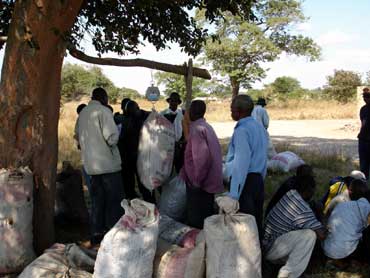 In Zambia, Cheetah Ltd. processes and exports paprika as the primary ingredient in food coloring. It is the largest processor of paprika in Zambia. Paprika is considered high valued, high quality sensitive, but a non perishable crop with much of the initial drying being done at the farm level. Cheetah has made a multi-year effort to utilize a smallholder out grower program in their overall production procurement effort working with local smallholder organizations. They offer a complete extension program, but only provide production credit for seed, having experienced considerable repayment problems with more extensive seasonal production loans. They purchase the paprika directly from the farmers at predetermined prices based on grade. In so doing they have incurred considerable expense and receive some managerial assistance from DED, a Germany development volunteer organization, in the form of donor subsidized volunteers appointed for a couple years to assist in managing the out grower program. Still they continue to experience considerable side selling to private traders commonly referred to a “Pirates”.
-
Read More About Cheetah Paprika Out-Grower Program – Zambia
In attempting to recover their costs in managing the smallholder out grower program they actually discount the price they pay the smallholders relative to large farmers marketing a larger volume of paprika. Thus, while Cheetah quotes a top grade price of ZK 3,400/kg (US$ 0.75), private traders were reported to offer ZK 3,600/ kg (US$ 0.80) in cash, independent of grade. It is not certain but this paprika could eventually be delivered to Cheetah or one of their competitors. In addition when Cheetah purchase paprika from the out grower farmers they will charge the farmers ZK 2,000/bag (US$ 0.44) as a transport fee from the buying point in the village to the depot in the town. In addition, Cheetah deducts 1 kg per bag as a handling fee to cover their cost in operating the buying point. These charges are independent of how full the bags might be. Typically a full bag of dried paprika will weight 20 to 25 kg, but farmers would often market less than a full back, going as low as 5kgs. The ZK 2,000 (US$ 0.44) for transportation was very transparent. However, the 1 kg handling charge was buried by simply weighing the bag as shown in the photo and recording 1 kg less than what was weighted. A little bit of creative accounting.
The ZK 2,000/bag (US$ 0.44) transport charge plus the one kg per bag handling charge can provide private traders a ZK 5,000/bag (US$ 1.11) opportunity to directly compete with Cheetah at financial parity. This is based on the average price between grade A and grade B being ZK 3,000, (US$ 0.67) and most bags falling into these two grades. For ZK 5,000 (US$ 1.11), the private trader would have to assure the grade, repack into tighter bags and arrange transport to the depot. This might not be that difficult. During the buying shown above, transport was a problem as the Cheetah buyer actually arrived by motorcycle and would have had to arrange for storage in the village for later pick-up if the Winrock marketing project personnel observing the buying had not volunteered to transport the paprika in their two crew cab pickups and saving the farmers the ZK 2,000/bag (US$ 0.44) transportation charge. Meanwhile not 50 m away a Seven Ton Lorry pulled up in front of a Small Village Kiosk. The kiosk apparently had the transportation problem resolved. Such village traders could easily become buying processing points for the farmers, and offer at least as good, if not a better, deal as Cheetah, as well as handle other commodities such as cotton which was also grown in the area as part of another out grower program, in what would be a Symbiotic Relationship within the village. Also, while the Cheetah buyer was expected to make cash payment, on the occasion shown above the representative did not have the funds and had to promise payment the following week. While Cheetah appears to be making payments fairly quickly, more often goods consigned to farmer cooperatives would promise payments in three weeks, but on average take about six weeks and occasionally up to three months. Much of this delay could be the banking system, where the time required for transactions to clear one step at a time for each segment of the banking business chain since clearing still has to be done by post instead of high speed computers. Under such circumstance it is little wonder that smallholders will accept a 20% discount on cooperative quoted prices for an immediate cash payment.
Exchange rate: US$ = ZK 4500
Last Revised: 26 March 2010
Relying on Cooperatives: Taxpayers Expectations
 Most of you who have followed my website and internet postings over the past few years, will recognize I have some severe reservation over the near 40-year reliance on cooperatives or producer organizations to funnel assistance to smallholders. As I have often mentioned I think they are administratively too cumbersome resulting in excessive overhead costs to be competitive with the often-vilified private service providers. The cooperative business model is heavily promoted by academia for its social desirability without getting into comparative business accounting that would quickly show they are non-competitive in an overall financially Suppressed Economy serving impoverished countries for which most of the population as limited spending power placing tremendous downward pressure on consumer prices and profits. Consumer Prices are often only 1/4th to 1/5th USA prices. This can result in the overhead costs exceeding the limited financial benefits from bulking input purchases or production output sales. When this happens, relying of cooperatives, will actually force beneficiaries deeper into poverty despited the massive rehortic about poverty alleviation. Much of the extra Overhead Costs can easily be identified and listed. Thus it might be appropriate to look at what interested taxpayers are expecting from development projects and how far this is from reality.
-
Read More About Relying on Cooperatives
An estimate of what interested underwriting taxpayers are expecting from development cooperatives could be obtained from pre-lecture surveys I asked over a four year period of students taking an upperclass/graduate level class I team taught at Colorado State University. Many of the students were in the Peace Corps Master Program offered at CSU or otherwise interested in going into the Peace Corps. The survey questions, the students answers and my commentary with estimate actual valurs on the response follow:
- As a percent saving of cost for inputs procured or percent additional price on produce marketed, what would you anticipate being the minimum competitive advantage to the individual smallholder member in working through a cooperative compared to obtaining these services via private traders?
Student average reply: 24.12%
That is a high expectation and more than I would expected in a pre-lecture survey. However, my actual estimated based on what limited information I have been able to synthesize over the past several years is Minus 10 to 15%. Advantage to the private dealers to provide the smallholders the best financial and most convenient returns, even when they appear to arbitrarily dictate prices. Just too much overhead expenses particularly when the cooperative employ outside professional managers with requiring housing, transport, etc. This is coupled with the limited profit margins available to the private traders due to limited purchasing power of the general impoverished population’s placing downward pressure on consumer prices.
2. What is the maximum percent of the input purchase price or commodity selling price would you accept for overhead costs, handling fees, commissions, surcharges, or other fees charged to the members to cover the cooperative operating costs for assisting its smallholder members?
Student average reply: 19.9%
Even though administrative costs are usually grossly underestimated, initially I would have considered this a reasonable estimate, but after interviewing the Central Growers Association in Kitwe, Zambia and there acknowledging the overhead costs of 35%, I will accept that. The Association had monopoly control on the tobacco auction, and that was virtually their only business with members side selling all their other crops contrary to Association by-laws.
3. At the end of the initial 5 years of donor funding, subsidies, and external facilitation, what is the minimum percent of the total beneficiary pool you would accept as active members in the cooperative to consider it a valid business service? Below this level of participation, you would consider the cooperative an ineffective business model and your project a failure.
Student’s average estimate: 60%
My best estimate of active participation is 10% based on a couple article distributed to the class but also recently during a Farmer-to-Farmer assignments in Madagascar. During the assignment the project senior advisors acknowledge an optimistic estimate of only 15% which I would consider closer to 10%. Can 10% or even 15% be considered a successful intervention?
4. What would be the maximum percent of “side selling” or “side purchasing” you would accept. Above this level you would consider the cooperative system ineffective in serving its membership? Side selling are goods which, according to contract obligation to the cooperative by-laws, should be handled via the cooperative that are intentionally diverted by members to private traders.
Student’s average estimate: 19.7%
My best guess is 60 to 70% based on interviews with CLUSA in Zambia. I think most of what is consigned represent in-kind loan repayments. I also wonder how much of the side-selling is to avoid leveraged loan repayments through the credit clubs after some members default on their repayments. If 60 to 70% of the goods are being diverted around your program, how can it be considered a successful program?
5. Synthesis the percent active participation (3) and tolerance to side selling (4) into an estimate of the minimum market share the cooperative should have to be a viable business model serving the community. Show computations.
If you had 60% participation and accepted 20% side-selling, you should expect the cooperative market share to be 48% of the total community’s business. However, the more limited participation of 10% and side-selling of 70% the cooperative market share would be about 3%. I would think this would be too trivial a market share to make a major impact on poverty alleviation even if the overhead was more reasonable. Remember most projects are denoted by community and not individuals, thus result should reflect total community involvement.
6. What is the maximum time lapse (in weeks) you would accept after smallholders have consigned their produce to the cooperative for them to receive their funds:
a. As per cooperative commitment?
Student estimate time: 2.6 weeks
Zambia the promise was 3 weeks very consistent with expectations
b. As a historic record of average time of payments?
Student estimate time: 3.9 weeks
Zambia normally delivered in 6 weeks after promising 3
c. As a maximum delay in payments?
Students estimated delay: 6.3 weeks
In Zambia estimate was 12 weeks. A lot of this could be related to manual banking through the postal system rather than electronic banking. However, the more critical question is how this all relate to the overall financial management strategy of most smallholders which is to retain produce in-kind as long as possible, only selling what is needed for immediate cash need, but needing the immediate cash. The retention of good at home will extend the crop marketing period for none perishable crops to 10 months after harvest but require immediate cash payments with no delays. This makes the cooperative model exceptionally inconvenient.
7. How much of a discount on what the cooperative receives for consigned produce to be marketed would you expect smallholders to accept for an immediate cash settlement for their produce from private traders?
Students’ estimate: 22.2%
As reported in Zambia and reiterated elsewhere was 20%, and the students were right on.
8. What is the maximum number of years since a cooperative’s inception you would accept before the cooperative starts paying the promised dividends to it members as stated in the by-laws and promoted by the organizers? Dividends being defined in the normal sense as profit sharing over and above the competition. This definition is often distorted in claiming to be paying dividends.
Students’ estimate: 3.7 years.
To the best of my knowledge no dividends have every been paid worldwide other distorting the definition to make a project appear successful. Given the high overhead costs mentioned earlier, it is highly unlikely that dividends can be paid as the overhead costs exceed the financial benefit. Not included in the survey would be what would you accept as a minimal percent of the financial benefit for bulking or other profitable activities to be distributed to the farmers as a dividend. I would expect at least 50%.
9. What is the minimum percent of cooperatives established as part of development projects funded with your tax dollars to survive for at least 2 years without donor assistance, subsidizes, or facilitation for you to consider the program a success and good investment of your tax dollars?
Students’ estimate: 55.5%
The two years represent two complete agronomic cycles. The expectation being if you can survive through two full cycles the chance of success is realistic. However, to the best of my knowledge no cooperative initiated as part of a development project has survived without continuous facilitation and subsides. Instead they collapse as soon as facilitation effort and external financing ends. Perhaps before the last advisor clears the departure lounge for the flight home!!
From the tax payers’ perspective are the students’ expectations realistic? Do the values the students offered represent reasonable initial targets for the parameters in question that would separate a successful from failed projects? From the implementing NGOs’ perspective how consistent is my estimates to your experience? Should these questions be included in routine evaluations and reports for development relying on cooperatives. Should project reporting also be expected to explain any deviation from these expectations as part of their routine reporting? Why are these questions rarely if ever included in project reporting? Does this represent just embarrassment or a cover-up of project failure and squandered funding? If these questions were part of reporting process would we have move on from relying on cooperatives decades ago and have considerably more effective development project that would actually alleviate poverty?
25 June 2019
Loss of Competitive Advantage: 14 Points to Consider
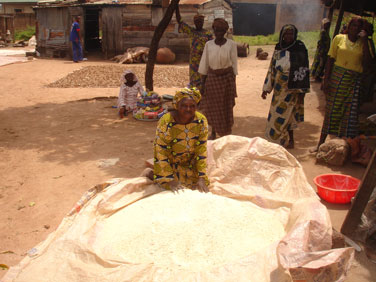 On several webpages of this website it has been suggested that the Cooperative Business Model as used in rural poverty alleviation development projects is too administratively cumbersome to be competitive with the often vilified Private Traders, and any benefits negotiated for the benefit of the smallholder producers is consumed in the inefficiency of the cooperative business model. This then results in most project being unable to survive without continuous and often substantial donor assistance and outsider facilitation. Thus, it might be desirable to numerate some of areas where the cooperative model could and often does lose the envisioned competitive advantage, and the smallholder producers are better off working through the private traders. This could be both from a financial as well as convenience perspective. The listing excludes the use of credit clubs with the prospects of farmers’ crops being confiscated to pay off their neighbors’ loans. An issue that normally renders the development cooperatives to near complete irrelevance in the beneficiaries’ communities’ total economic activities.
-
Read More About Loss of Competitive Advantage
Development Cooperatives’ Loss of Competitive Advantage
- Administrative procedures: Managing cooperatives usually involve considerable more administrative activity relative to private traders as discussed in detail on Another Page. Typically, this is associated with the consignment selling of produce and pre-ordered of inputs, which require general management, transparent accounting, and storage management, well above the simplified operations of the competing Private Service Providers. These extra administrative activities must be paid for as part of the overhead costs for operating the cooperative., which in turn must come from the financial benefits of membership. However, in the overall suppressed financial environment these benefits might be severely limited and not be able to cover this extra overhead cost after the facilitation and external funding ends. When this happens continued participation in the cooperative, could result in the cooperative being forced to pay the farmers less than what is offered by private service providers thus forcing the farmers deeper into poverty. Unfortunately, administrative costs are normally substantially underestimated in planning any business venture.
- Permanent staffing: With the additional administrative requirements, as mentioned above, there is usually need for permanent qualified staffing. Even those who advocate for Cooperatives acknowledge the critical importance of good qualified managers with at least a diploma (Associate Degree in USA) or bachelor’s degree. This is proposed without considering the sustainable cost for hiring a qualified staff that most likely will have to come from outside the area. In additional to a qualified general manager you most likely will need an equally qualified accountant to manage the individual member accounts, and warehouse manager to accept and keep track of the consigned goods or distribution of the consolidated purchased inputs. Finally, there will be a need for some manual laborers to porter the good in and out of the warehouse. The latter most likely can be hired locally. Is there sufficient financial benefit to cover all the salaries and financial fringe benefits of this staffing need, let alone any in-kind benefits usually provided to transferred staff.
- Imported Staff Support: When you import qualified staff from outside the project area, as is often the case, the cooperative will be expected to provide adequate housing consistent with professional qualification and travel allowance to visit families. That again can substantially run up the overhead costs. In contrast the private traders could easily be indigenous to the community and incur no such costs or even a line item for these costs.
- High Salaries & Wages: During the external funded facilitation period most implementing NGOs pay the local staff salaries and wages somewhat above the competitive rate. This is an incentive to work with expatriates and easily justified. However, when the facilitation effort is over will these people accept some more competitive wages, or will there be some massive and disruptive staff turnover of the more experienced staff necessary to effectively continue the management.
- Physical Facilities: Cooperatives usually require some physical facilities for storage of consigned goods as well as consolidated input purchases. They also need some office space to accommodate the general manager, accountant, and warehouse managers their records or computers etc. This could also include some processing value added equipment such as that needed to convert parchment to green bean coffee. This is very easy to justify and as part of the initial facilitation activities can be provided by donor from external funds. However, once external assistance ends all these physical facilities must be maintained including utilities paid, building and equipment repairs, occasional painting etc. Compare this to the limited physical facilities or even temporary buying points often used by the private traders that keep their overhead costs down.
- Proximity to the farms: If cooperatives are investing in large permanent facilities and expecting the farmer to come to them with their goods, while the private traders are working via scattered temporary buying point, the private traders will be more convenient to reach and get a competitive advantage with cheaper transport cost for the farmer. Often farmers, even smallholders, must hire transportation, if only a bicycle or ox-cart.
- Project Vehicles: With all the running around necessary during the initial facilitation effort to get a cooperative started, some utility vehicles are readily justified and can be easily and appropriately be provide during the period of external funding and facilitation. However, once the facilitation effort is over the operation and maintenance will have to be funded by the cooperative as part of the overhead costs derived from the limited financial advantage cooperative membership provides. During this time will the externally hired qualified general manager, accountant and warehouse manager still consider the vehicles a perk of their position and available for use for a combination of personal and business use, with a possible tilt toward personal. If so overhead costs will skyrocket!! Granted the initial capital costs of the vehicles can be part of the facilitation effort, but not the post funding operating costs, including an escrow account for the eventual replacement vehicles every 3 or 4 years.
- Trucks for transporting goods: As with the general utility vehicles trucks for transporting consigned goods and consolidated input purchases are readily justifies and can be easily purchased during the externally funding facilitation period. But, is this a good investment and can the trucks be efficiently utilized? How often are they used for only partial loads? It should be noted that often Private Service Providers will rent trucks as need and consolidate shipments with other traders or use public transportation like the tops of those overloaded buses. Do you think all those goods on top of the buses are personal luggage, or traders moving goods around cheaply!! Can this make a substantial difference in operational costs?
- Individual commodity vs. multiple commodities. Most projects are oriented around a single commodity such as soybeans, sunflower, or paprika, while the private traders usually deal with the full range of crops the farmers are producing in the area. The multiple commodities spread any fixed costs over all commodities and thus lower the overhead cost for each one providing a competitive advantage to the private traders.
- Spillage & Pilferage: More likely cooperatives will have higher levels of spillage and pilferage then the private traders. This is associated to the additional handling going into and out of storage as necessary for consignment selling. Some of this could be combined as “careless” worker deliberated dump bags that break allowing the contents to be scooped up by the work crew and taken home. How are these loses distributed over the membership. Few farmers will accept the loss of a bag of grain spilled by careless workers or even a prorated loss if another member’s consigned bag is spilled.
One of the reasons most small enterprises are restricted to being family enterprises is that as wages get closer to starvation margin, the temptation to pilfer increases. Thus, you need someone with a strong vested interest in the profits to supervise all labor inputs, and this must be a family member. With the private traders will most likely keep closer supervision on laborers handling goods, and even if spilled it would be between trader and laborer as the bag has already been fully paid for.
- Financial Management Strategy: With the limited banking facilities available to most smallholder farmers the overall Financial Management Strategy emphasis retaining goods in kind as long as possible, monetizing only what is needed to meet immediate cash requirements and needing the immediate cash payment. The marketed amount could easily be 10 to 15 kg, an amount a woman can conveniently carry on her head while heading to the market. This can greatly prolong the marketing period and overhead costs, to as much as 10 months after harvest as noted by rice traders in Eastern Nigeria (PDF). These traders stated they rarely had difficulty purchasing rice until 10 months after harvest which would be well after the following crop was well established. This could be major problem if, as most cooperatives are, involved in a single commodity with staff spending most of the time loafing waiting for commodities to come in while getting paid. This could also increase the lag time between consigning goods and receiving payment, as it will take longer to bulk sufficient goods to get the highly promoted but never quantified bulking benefits. Given the limited banking facilities and risk of keeping too much cash in the house, this might be well rationalized financial management strategy.
- Cash Payments & Distrust For Consignment: Based on past experience with government mandated cooperatives and other financial institutions with a 3 to 4 up to 6 weeks delay in getting paid most farmers will prefer cash and are often willing to accept a 20% surcharge or discount to deal with cash. This preference of cash appears well recognized by development workers, but no one wants to make any adjustments in their business model to accommodate this. The cell phone-based M-PESA banking/financing system appears to be a highly effective “grassroots” initiated means of moving money around while avoiding the carrying cash. It is well worth looking at in more depth in other countries. However, the question would be, with the typical business model would a cooperative have enough buying float to load onto their cell phones an effectively use this mobile banking system.
- Consensus Building: A major part of the promotion of cooperatives is the participatory governance. However, this requires a large amount of consensus building among members which means a lot of time and effort spent in meeting which requiring paying salaries to the salary staff and reducing the time they spend on serving the members. Hopefully, this is far short of the leverage compliance of the by-laws imposed on members of the cooperative to manage the irrigation system in Madibira, Tanzania. During the facilitation effort you may get people to volunteer for some of this, but will they continue once donor assistance ends?
- Social, Non-Business Services: Many cooperatives particularly those established as part of development efforts envision providing some social services to their members and communities. This could include extension services, children’s’ education, medical clinics, etc. However, usually overlooked is that these cost monies which must come from the limited financial benefit of membership, mostly in the form of bulking production for sale or consolidating input purchases. All of social services will reduce the cash returns to the beneficiaries which they often resent, particularly if only a small percent of the community is participating in the cooperative, but social benefits are distributed to the community at large.
How much of the negotiated bulking/consolidating financial benefits have been consumed with these items? Were they fully consumed just with employment of qualified personal including perks and fringe benefits? At what point did the burdensome administrative cost exceed the private traders profit margins? Did you get as far as the transport costs before this to was fully consumed? What is your management plan when the overhead costs exceed the private trader buying price? Will you be forced to pay the farmers less, lowering their profit margins and forcing them deeper into poverty? Will you ever be able to pay those promised dividends at the end of the season? What would be the probably that the cooperative will collapse once donor funding ends and facilitators fly home? Finally, would the overhead costs mentioned above amount to 35% as mentioned by the Central Growers Association (PDF) in Kitwe, Zambia, which limited their business opportunity to only running the tobacco auction which they had monopoly control over with all other members’ business being side-sold.
Last Revised: 27 August 2018
Financial Transparency
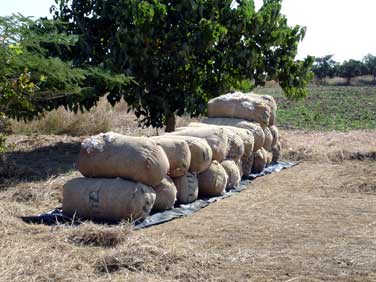 Another problem with cooperatives and farmers organizations is the need for financial transparency which entails an understanding of accounting, both by managers and members. The latter because members need to make certain the managers are not “cooking the books”. Unfortunately, accounting skills are an educational skill requiring specialized accounting instruction, which is often not readily available in smallholder communities. Unfortunately there is something about accounting that goes against most human nature and it is something that most people avoid or at least procrastinate about, ultimately trusting other to take care of the tedious effort. Within smallholder communities this provides opportunities for cooperative managers to abuse their trust. The MAMCOS cooperative in Madibira, Tanzania is an example where accounting irregularities became the norm and the participatory democratic process to protect against them were put aside by the government seconded management. Also, how often have there been reports or at least rumors of cooperative managers taking off with the cooperatives funds forcing the cooperative to disband.
Last Revised: 2 Nov 2005
Madibira Smallholder Agriculture Development Project
 Madibira Smallholder Agriculture Development Project is a 3000 ha rice irrigation scheme in Southern Tanzania. It is located off the Tanzania-Zambia highway some 70 km west of Mafinga, where the tarmac ends. The scheme was constructed through a loan from the African Development Bank and done so in an environmentally friendly manner. It was built on government land and thus beneficiaries were tenants on the land with the expectation of paying rent for its use as well as water access fees. The land was allocated to the beneficiaries in one hectare plots divided into 30 ha irrigation blocks. The first season of rice production was in 1998-99 crop season. It was intended to be owned and operated by a cooperative named “The Madibira Agricultural Marketing Cooperative Society” (MAMCOS). Major donor funding with technical assistance facilitation continued until December 2000, at which point most of the 3000 ha had been developed and cultivated to rice.
-
Read More About Madibira Smallholder Agriculture Development Project
Returning in the spring of 2005, 4.5 years after donor funding ended, there was clearly a very positive economic impact of the scheme in the area. The scheme was now fully subscribed with all useable land allocated and even the access road was well maintained. The economic impact was most noticeably demonstrated by the purchase of some 50 Asian built rice based power tillers for tillage and transport as shown in photo above. Three fourths of these were individually financed with only one fourth financed via the credit union, mostly to it officers. The estimated cost of the power tillers with accessories is about US$ 8,000 per unit. Other signs of the positive economic impact of the scheme could be seen in the number of lorries and farm tractors in the area, additional shops with generators, TVs and VCRs.
However, the management might best be defined as Mafia style. MAMCOS still exists, though more by government decree than an effective participatory democratic management effort. There had been no annual meetings or elections of new executive committee members for at least three years. Instead the scheme was being managed by seconded government officials still receiving government salaries. MAMCOS now claims 3,400 members. This would represent an over subscription by 400 people, many of whom were reported to come from outside the designated 5 beneficiary villages. The understanding was that these people were waiting of someone to give up their allocation. It was also rumored that for an informal payment of TSh 500,000 (US$ 500) to the management, the management would assure quick access to the scheme. This could only be done by effectively evicting an established beneficiary, mostly for failure to pay annual fees for rent and water. A situation the management could or could not exercise flexibility with individual beneficiaries. The management was collecting annual fees of TSh 40,000 (US$ 40) from the participants, presumably to cover administrative costs including escrowing funds for future repairs of the scheme. However, while it was possible to get an account of what participants contributed, there was no accounting for expenditures. The impression left was that most of the money was diverted into management’s pocket. There was also the mandatory purchase of TSh 100,000 (US$ 100) in share capital for MAMCOS. This money was kept in a bank some three hours drive away from the scheme to earn bank interest to be paid as a dividend. The share capital appeared to have nothing to do with the financial management of the scheme. It also was expected to disappear. No dividends appear to have been paid nor any share capital refunds made to those who left the scheme. Those protesting the management would quickly find themselves on the list for replacement. This level of mafia style management was just enough to be resented, but not enough to render participation unprofitable.
There remained no formal tenant relationship statement of entitlement, inheritance rights etc. Also, there appeared no additional individual investment in land development and water management, which would be an expensive investment without assured tenancy. The only scheme maintenance being done was the annual cleaning of tunnels where water was diverted from the river into the scheme and which filled with sediment each season. This was all done by subscribed labor at no capital costs to the scheme.
While from a western perspective this appears unacceptable, in most developing countries it is accepted as the unfortunate norm. It is now 10 years since my last visit, and I wonder if the scheme is still operating. One of the host management officers once mentioned that their real plans were to operate the scheme for 10 years for their personal benefit by then it would have deteriorated sufficiently to require major externally funded renovation.
Taking all this into consideration, I still think the project is financially and operationally viable but, like I have mentioned on so many other pages of this website, it will have to keep careful track of overhead costs. This would include emphasizing hiring and training local people to fill most of the management positions rather than bringing in outsider with the extra overhead costs associated with housing, transport etc. Within the five beneficiary villages I think such staffing is easily possible. I have often thought that given the seconded staff desire for self management including claiming up to 10 ha for personal cultivation, a project like Madibira could be turned over to an international NGO for continued operation. In this case Catholic Relief Services (CRS) might be the most ideal. This is because the most of the residents of the area are Catholic and their is a 100+ year old Catholic Mission there, that was started by the Germans when Tanzania was part of German East Africa. I was then managed by the Consolata Fathers from Italy for many decades. It also has a history of agriculture training and support activities. I would expect CRS could return the scheme to effective operation with one expatriate civil/irrigation engineer volunteer, and rely on local hires for all other staffing needs. It might be something the Consolata Fathers in Italy, with their long term commitment and involvement in the area, would be willing to sponsor on a continuing basis.
It might be desirable for donors to insist on external mangers for project such as Madibiria particularly if they are being reconstructed after failing from excessive “management for personal benefit” or if a host country has a history of projects being prematurely in need of massive reconstruction.
Last Revised: 21 March 2015.
Cooperatives Regulatory Contribution
 Perhaps the real contribution the cooperative system can make is as a regulator of the private sector, if there is a real need to regulate them in an economically suppressed economy which already limits charges private business can charge. By offering an alternative, cooperatives can have a regulator role and do so considerably more cost effectively than government regulating agencies. This can also effectively be done with a limited minority market share.
-
Read More About Cooperatives Regulatory Contribution
If one accepts that cooperatives are managed more like public sector organizations such as parastatals than private companies, a good example of the regulating influence of public organizations is the comparison of a private trader competing with ADMARC, the mammoth parastatal that dominated agriculture support in Malawi, and continues to be emphasized for government sponsored development projects long after it was supposedly privatized. This private trader was able to operate just within the buying and selling rates quoted by ADMARC. Buying at 0.01 Kwacha above and selling at 0.01 Kwacha below ADMARC’s rates he could profitable move commodities from the extreme ends of the country to his base outside Blantyre. He was effectively being regulated by ADMARC. The question remains had ADMARC’s cost structure, reflecting their inflated overhead costs, allowed him to increase his profit margins above what they would have been in open competition with other private traders. Another question, how much was ADMARC’s overhead responsible for it being cheaper to import soybean oil from Argentina than collect and process locally produced groundnut oil?
Thus while cooperatives may have a regulator impact on private traders, they also could inadvertently allow private traders to increase their profit margins to coincide with the cooperative’s overhead costs, at the expense of both the farmers and consumers alike.
Last Revised: 29 march 2010
Reconciliation With Private Service Providers
 Another overall need for the development community to undertake is a major reconciliation with private service providers as when donor funding ends and the cooperative goes under, it will be the private service providers that will take over the support services. The typical virtually slanderous vilification of private traders as contained in the following quote taken from a marketing project in Zambia:
-
Read More About Reconciliation With Private Service Providers
“… increased market opportunities to enable farmers to improve their produce (both in quality and quantity/variety) and prices by eluding unethical middlemen dictating exploitative prices to farmers will provide a conducive environment for sustained farmer participation and growth”.
This should be recognized as the slander it is, with all the liabilities so implied. If pursued it could be pursued in the donor’s capital or headquarters location, rather than the host capital, particuarily if the offending document was drafted by the donor at the donor’s headquarters. It must also be recognized that most statements are put forth by vested interests in promoting public enterprises including cooperatives, with no substantial proof offered. Is there any proof that this exploitation is taking place? How would one legally quantify exploitation? Or are private traders operating in a highly fragmented competitive family based enterprise environment as is the case in Nepal, and which may such a limited market volume that mandates high markups for the traders to avoid poverty as was shown in Tomato Vender in Zambia and Banana Trader Uganda.
The USAID-funded CARE implemented REAP (Rural Enterprise and Agro-Business Project) is an example of a project that tried to enhance private sector support services for input supply and produce marketing. It supported many village based enterprises, such as the one shown in photo above and mentioned as being with the Lorry Parked in front and only 50 m from the Cheetah marketing point struggling with transport, to provide these services, and was able to effectively continue beyond the initial donor funding. The biggest problem was the need for sufficient cash float to purchase produce at the end of the season. However, this should represent short term credit for 60 to 90 days vs. longer term seasonal production credit, and could be handled with well focused micro-credit projects.
Last Revised:26 March 2010 .
Smallholder Empowerment
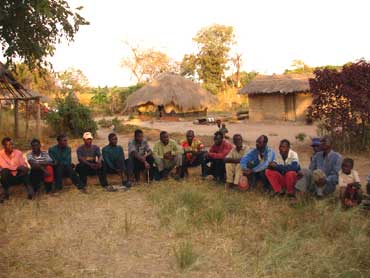 One of the objectives of farmer organizations is to enhance the political empowerment of the smallholders. This is a highly desirable task. The question then becomes would this objective be more effective if separated from the business objectives. This would be very consistent with the USA model if you separate farmer associations from farmer cooperatives. Farmer associations are farmer organizations usually associated with a specific crop or animal farm enterprise such as wheat or maize production, or dairy or poultry production for which virtually all USA farmers are members of at least one. They are basically information sharing via newsletters, trade journals, annual meetings, etc. They also are political empowering via lobbying efforts with various state and federal legislative bodies. They normally do not get involved in business activities such as input supply and marketing produce.
-
Read More About Smallholder Empowerment
In contrast, farmer cooperatives are farmer-owned business enterprises. In the USA they command less than 30% of the market share of the various commodities with which they are associated, with only the dairy cooperative controlling a majority market share. USA cooperatives system have for many years been in a long term decline, both in market share and in the number of member farmers. This is too the extent the USDA, the federal department responsible for promoting them no longer monitors or reports on the cooperative system’s market share or membership, and has not intentions or doing so. The Most Recent Data is from 1998 and is now over 15 years old.
Farmland, which was a conglomerate of cooperatives and thus the largest cooperative entity in the US, attempted to vertically integrate from farm to the consumer similar to what the Value Chain Enterprises heavily promoted by development efforts are attempting to duplicate. However, Farmland became overextended and was forced into bankruptcy and ultimately dissolved. The limited market share cooperatives hold in the USA, as well as the bankruptcy of the largest cooperative enterprise, is not really a solid example upon which to base development efforts for smallholder producers in developing countries. What will assure the value chain enterprises will avoid the fate of Farmland?
Last Revised:25 March 2010
Perpetuating Cooperatives – Deceptive/Dishonest? Spin Reporting
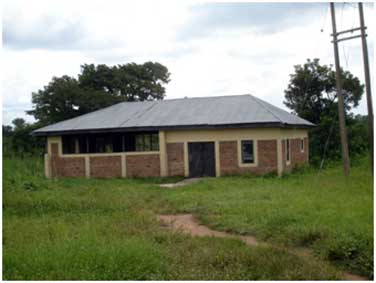
Many pages and links in this web site are devoted to taking a closer look at the overall effectiveness of the cooperative system for funneling assistance to the smallholder producers. The basic concern is that the cooperative business model, while it may be social ideal, desirable, and thus politically correct, is just administratively too cumbersome to effectively Financially Compete with Private Traders in the overall Financially Suppressed Economy encountered in most developing countries that already substantially suppresses profit margins. It is also highly probably the costs for managing the administratively cumbersome cooperative business model will quickly exceed the envisioned financial benefits from bulking produce and consolidating input as well as exceeding the profit margins of competing private service providers. This would result in compelling those farmers relying on the cooperative to accept lower prices than what the private traders offer, this in turn would lower the farmers’ profits and force them deeper into poverty.
-
Read More About Perpetuating Cooperatives – Deceptive/Dishonest? Spin Reporting
The cooperatives model of consigned sales may also be highly inconvenient in a society that emphasis clean cash transactions, and incompatible with the basic Financial Management Strategy that emphasis retaining assets in kind if possible and only monetizing them, as needed, to meet immediate cash requirements. This appears a fairly well conceived Financial Management Strategy for an impoverished society with limited banking facilities, and the need to reduce temptation of cash in the “cookie jar”. The question comes, if this is the case, why does the cooperative model persist in the development effort.
Vilifying Private Traders – Slander!!
The use of the cooperative model was initiated in response to concerns that private traders were exploiting the smallholders by selling inputs at inflated prices and buying produce at suppressed prices. This is done through blanket vilification statements such as the following taken from the RFP of a recent Zambia project:
Increased market opportunities to enable farmers to improve their produce (both in quality and quantity/variety) and prices by eluding unethical middlemen dictating exploitative prices to farmers will provide a conducive environment for sustained farmer participation and growth.
Such statements appear to be accepted at face value and never really validated to determine how much of the possible tripling of the nominal farmgate price represents business costs vs. profit margin. Typical business costs that need to be consider are any repackaging needed, the casual piece meal labor to do the repacking, transport costs including any informal road taxes, market access fees, etc. Once the business costs are factor are the buying and selling prices are reasonable, particularly for remote off-tarmac areas where transportation costs could Transparently Triple compared to highway travel. Such a simple investigation could easily verify if the proposed cooperative business will have a sustainable competitive advantage over the competition once external support and subsidies end, or if will be too cumbersome and push the farmers deeper into poverty.
Most likely the vilification originated with host country officials trying to promote public sector support services with a potential vested interested in them for personal financial benefits as appears to occur in the AfDB funded irrigation project in Madibira, Tanzania. Such vilification, if not substantiated, could constitute slander and exposure those legally responsible to Substantial Slander Litigation by an easily organized association of private traders with additional class action litigation to refund the treasury for squandering money on projects based on false assumptions, and vertically no sustainability potential, once external assistance ends. It should also be noted that while someone such as a host country official might have proclaimed this as fact, once individuals as part of a implementing NGO repeated it they are responsible for the accuracy and liable to anyone slandered.
Program Entrapment
It would be difficult to image that most those involved in working with development cooperatives, particularly those contracted to implement projects and in direct contact with the beneficiaries are not aware of the limited effectiveness of the cooperative model, and both willing and capable of looking at alternatives, if required or given the opportunity to do so. They have to be well aware that the projects are attracting only a minority of the Potential Beneficiaries, and often even those participating are diverting the bulk of their business elsewhere. Most likely only consigning to the cooperative enough produce to cover their input loan obligations and astutely side-selling the remainder to avoid additional consigned goods being confiscated to pay a neighbor’s debt, as well as getting a better and much more convenient financial return. They also must be equally aware of the extensive facilitation effort needed to sustain the cooperatives even while benefiting from external facilitation and financial support, the limited attendance at cooperative meeting as well as the degree to which the facilitating NGO dominates the participatory process to leverage decisions toward what they are offering, and turnover of “elected” leaders. Perhaps the reason a business model comparison between private trader and donor promoted cooperative is not readily done is tied to the Overall Development Process which emphasizes the donor conceptualization of what ideally should be done, specifying in detail what is to be done, with only limited if any direct involvement of the beneficiaries, and with limited opportunity for innovations. This is then reinforced by the implementing contractors “spin” reporting as the best way to appease donors and assure project extensions and success in bidding for future projects. This also represents a vested interest in extending the facilitation process, if possible, for the job security it represents. However, it does nothing for poverty alleviation of the beneficiaries and could easily force them deeper into poverty.
Deceptive (Spin) Reporting
Ultimately, this results in some deceptive, bordering on dishonest, reporting in progress reports and periodicals of the effectiveness and contributions projects have on their beneficiaries. Typically this reporting will overlook the Basic Business Parameters, that would determine not only the willingness of farmer/beneficiaries to participate in the program but more important the extent they are relying on the project for the services offered. As such the spin reporting represents a far greater commitment to the mechanism by which smallholders are to be assisted, then to improving the economic well-being of the intended beneficiaries, who are reduced to being mere pawns in the continuation of the “Great Game” as so well defined a century ago by Rudyard Kipling in his classic book Kim.
Disregarding Overhead Costs: The most common means of deceptive reporting is to disregard the overhead costs for operating a cooperative that, for the cooperative to be sustained beyond external donor funding and facilitation as normally stipulated in the initial project documents, must be charged back to the members. Can any business operate without incurring operating costs that must be taken from the mark-up and profit margins? Frequently, in development projects the operating costs are co-mingled with the facilitation costs needed to initiate the project. These may need to be disaggregate as much as possible and reported separately. These operating/overhead costs can be extensive and greatly exceed the financial benefits of cooperative membership. When that happens attempting to continue the cooperative after donor funding ends, will reduce the money farmers can receive for good consigned to the cooperative, which also reduces the farmers profit margins, and force them deeper into poverty. Thus, while the rhetoric is poverty alleviation the model is poverty enhancement.
On occasion cooperative operating costs are conveyed as being distributed to the farmers as a financial benefit. Something the farmers would never realize unless artificially subsidized by the donor funded facilitation effort, and prevents the project initiated cooperative from continuing without external funding and facilitation. Such reporting practices take what is basically a deceptive report and makes it a dishonest report.
Breakdown of an $8.95 Retail Bag of Coffee Portion Amount Retailer portion $3.00 Roaster portion $3.65 Misc (roasting loss, shipping, customs) $0.60 Sustainable Harvest portion $0.15 Grower portion $1.55 Retail price $8.95 An example would be the bag of fair trade coffee shown in the figure. Here the pound of fair trade coffee indicates the growers receive $1.55 of the $8.95 retail price for roasted beans sold in the USA. According to most English semantics, the term grower implies the farmers who grew the coffee trees, and not an intermediary representing the farmers such as the cooperative they are mandated to be members. However, this is fair trade and mandated to go through a cooperative. Thus, most likely this $1.55 is what export buyer paid the growers’ cooperative for green bean upon delivery to the exporter’s warehouse, most likely at the nearest seaport or major city. What else could it be? To determine what the growers really received it would be necessary to back up the transportation costs between the point where the coffee was purchased to the growers’ cooperative in the village and including any off-tarmac transport that can cost substantially and transparently more than Triple the paved highway t/km rate. In addition, any processing cost undertaken by the cooperative instead of the farmers in getting from the harvested cherries to parchment coffee and finally to marketable green bean coffee. Typically, the hulling to remove the parchment layer requires expensive machinery that individual smallholder farmers cannot afford and they either sell their coffee as parchment or rely on a cooperative to hull it to green bean. Other costs would be the overhead costs for operating the cooperative that would include employees’ salaries and fringe benefits, if any, storage losses including pilferage, maintenance of any physical facilities including vehicles, capital depreciation of any equipment, utilities, etc. as described on Another Page. Finally, since it is fair trade there will be a social tax designed to assist with community improvements. The bottom line might be that the growers will be very fortunate if they received $1.00 of the $1.55 claimed to be their portion. This of course with the usual consignment delays etc. associated with the cooperative business model. With all this how much easier would it be to just to side-sell the parchment coffee to a private trader for immediate cash and be done with it?
While the illustration above may be a more obvious indication of the deceptive bordering on dishonest reporting, it is almost universal in development reports to overlook the cooperative operational overhead costs. This was done in the case of the World Bank financed Farmapine Cooperative in Ghana that was trying to extend the value chain of pineapples for direct export to Europe. The article makes an extensive but bewildering effort to demonstrate a financial benefit for the members, but also acknowledges considerable side-selling for a better price but using the proxy statement concerning farmers not honoring their contracts. The result was that one year after the article was published the cooperative collapsed under a mountain of debt. In reality, the cooperative only represented about five percent of the smallholder pineapple producers and given the extent of side-selling a considerable smaller market share. Thus, the project was virtually a non-entity in the pineapple industry of Ghana even for the smallholder component of the industry.
Use of Aggregate Data: Another way of spinning reporting to give a more favorable impression and hid the reality is to concentrate on aggregate data. This was done in another fair trade coffee report from Ethiopia. It contains the following passage:
The Oromia Coffee Farmers’ Cooperative Union, launched in June 1999, requested and received permission from the government to become a direct exporter of its members coffee bypassing the central auction and giving more control and market share to the producer. With ACDI/VOCA assistance, the union – representing 21,891 coffee growers – last year exported 181 tons of coffee directly to specialty buyers in Europe and the US.
While as written it sounds impressive, but by doing the simple arithmetic of dividing the number of members (21,891) by the market volume (181 tons) will indicate only 8.3 kg/member. That is really a trivial amount. Furthermore, the actual benefit to the farmer is at most the price difference between the Fair Trade preferential price and the open market price offered by private traders. What would that be? Perhaps it would be at most US$ 0.50 per kg or a total benefit of only US$4.00/member. In addition, if the average smallholder production is 450 kg/ha and they manage only 0.5 ha of coffee, the expected production per member farmer would be 225 kg, for which the 8.3 kg/member would represent only 4% of the typical farmers production and represent an area of only 200 m2 and perhaps only 60 plants. What happened to the rest? Was it side-sold to the vilified private traders who actually provided the farmers a better financial deal than the cumbersome cooperative. Thus, the question is then how many of the 21,891 members are really active members vs. just having their name kept on the books. The final question is how someone can have the audacity to publish as a success a program that accounts for only 4% of the produce and provides an annual benefit of only US$4.00. It appears the overall article is more interested in seeing how many members can be recruited then how well they are served. Unmentioned is how the value of the 181 tons of marketed coffee compares with any input loan in-kind repayments, which is often the limit of produce committed to a cooperative, a possible quick index of extent member farmers rely on the cooperative for the services offered.
Market Share – Only In-Kind Loan Repayments: Again, a careful analysis of reports promoting the cooperative model for poverty alleviations could show farmers relying on the cooperative system for little more than the in-kind repayment of input loans amounting to perhaps 10% of their marketed crop and side-selling the bulk. This is well illustrated for Thailand in an article coming from Kesetsart University intended to promote cooperative for Poverty Reduction (PDF)that I was requested by an internet forum based in Laos to evaluate. Shifting through all the data, the article lists the overall Thai population at 65 million, of which 40% or 26 million are involved in farming. Of these 6.2 million (9.5% of total population) were members of agricultural cooperatives representing only 23% of the farming community. The agriculture cooperatives assisted their members in marketing 59,448 million Baht of produce. However, using a separate FAO report (PDF)providing farm income during that time period, which would be the potential value of produce which, according to most cooperative by-laws, should have been marketed through the cooperative, was 131,193 Baht/family. Thus the 6.2 million members should have marketed some 813,397 million Baht through the cooperatives. Thus, the farmers only relied on the cooperative to marketed only 7% (59,448/813,397) of their marketed production. Not really a sufficient amount for major poverty reduction. However, the 59,448 million Baht of marketed produce is very consistent with the 52,805 million Baht of cooperative purchases. Thus, it appears the farmers were relying on the cooperative only for procurements of inputs and consigning only sufficient produce to cover the repayment of their input loans, and then side-selling the bulk of their produce. One can only assume that if consigning only what is needed for loan repayment the complex accounting for initial payments and delayed dividends payments become mostly an internal accounting exercise in the cooperative and a mute issue to the farmers, as little money actually was exchanged.
While the detailed example is from Thailand, it is consistent with interview comments from the local staff of CLUSA in Zambia (PDF)claiming the cooperatives they were sponsoring only marketed the equivalent of member loan repayments.
Continuous Facilitation
The ultimate result is that cooperatives originating as part of development projects and directly competing with private service providers require continuous extensive facilitation and financial subsidies by donors and advisors just to remain open for business. An example would be another periodical report praising the coffee Fair Trade program in Haiti that required five NGO to continuously facilitate the program which had to be supported by some taxpayers somewhere. Even then, perhaps somewhat better than the case in Ethiopia, some simple computation would show that the average member of the cooperative marketed less than a standard 60 kg bag of green coffee through the Fair-Trade program. This was estimated to represent only 100 coffee plants and 1/20th of a hectare of land. Even by smallholder standards this does not appear realistic, and either most of the members have become inactive or most of the coffee is being side-sold.
Finally, virtually all cooperatives initiated as part of a development project collapse almost immediately when the donor assistance ends, as happened to the Farmapine Cooperative mention above in Ghana. That seems to be a common result for the development cooperatives including the one pictured at the top of the page. This was a cooperative initiated as part of a FAO sponsored women’s income generation project for processing cassava to gari, a dried less perishable form of cassava consumed extensively in West Africa. The cooperative is now locked with all the equipment inside. It does not appear to have processed any cassava for months. It took more than 30 minutes just to find the person with the key to unlock it for the consultant’s visit. Meanwhile, across the road, 100 m away, a small private family enterprise is processing cassava into gari at full capacity. The proprietress could easily have been a member of the defunct cooperative. Is also interesting to note the photo at the top of the page and accompanying one of the apparently successful family enterprise along with all the commentary that the farmers may be more interested in out-sourcing the value added then having it done by a cooperative were expunged from the Submitted Version (PDF) of the consulting report and replaced with commentary proclaiming this was an ideal opportunity to introducing a cooperative. This allow the final version to be more politically correct, assure the continuation of the current approach, discouraging any project evolution, but what does it do for the plight of the smallholder producers, and their interest in out-sourcing this value-added component of the value chain? It might be worth noting that most smallholder farmers are well overextended and taking time to process goods through a cooperative, would be a distraction from their primary concern of crop management. Thus, avoiding cooperative involvement in favor of crop management might be an astute business decision.
Class Action Exposure
The degree to which this deceptive, bordering on dishonest, reporting is pervasive throughout the agriculture development effort for smallholder producers so that it involves virtually all projects, all donors, and all countries, as noted in all the cases mention represent different donors and different counties, has to result in substantial exposure to Class Action Litigation from the funding tax payers, against the contractors who write the reports as well as the donor’s project and contractor officers that accept the reports and even encourage the deceptive reporting. Why should tax payers continue to pay for projects requiring mechanism with a clear history of very limited success and sustainability? Just on historic probabilities what percent of cooperatives or producer organizations survive for 2 years, 2 complete agriculture cycles, beyond donor support and facilitation? Would it be less than 5%?
The concern for the misrepresentation, lack of including basic business parameters that would separate projects that are fully appreciated by the beneficiaries from those that are more publicity stunts, and spin reporting has resulted in an inquiry to the USAID Office of Inspector General (PDF)with the assistance of the good offices of former Senator Mark Udall of Colorado. The inquiry has been assigned case number 12-0189 and produced a formal reply from the Assistant Administrator for Audit (PDF). The reply acknowledged that the information was important, not available and indicated intention in the future to collect the business parameters data but was concerned that collecting the data would be costly. How much the reply was simple an administrative ploy to put off an inquiry and how much a serious effort for future project efficiency remains to be seen. Anyone who has seen any effort to include the business parameters I would appreciate hearing from them or anyone wishing to follow up on the are welcome to do so.
If anyone has an alternative to litigation to bring forth the necessary changes in these programs, please contact the web site organizer.
Last Revised: 27 August 2018.
Request for Information: Basic Business Parameters
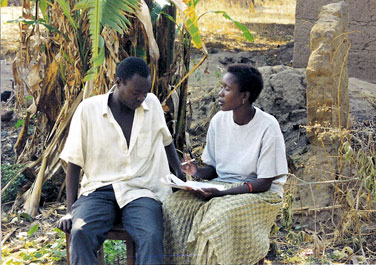 For those who have been following the material in this website you will appreciate that it brings to question the overall effectiveness of farmer organizations as a Sustainable Competitive business model for assisting smallholder communities. It seems that over the past couple decades the mechanism by which smallholders are assisted has become more important than the overall effectiveness of the assistance or the sustainability of the assistance without external support and facilitation. A mechanism that overlooks a reasonable well conceived preference for cash transaction and Holding Produce In- Kind as long as possible before marketing goods to meet immediate cash needs.
-
Read More About Request for Information
It also seems that to question the effectiveness of farmer organizations as a means of assisting smallholders goes against some deeply entrenched vested interest, including senior people who have devoted their entire professional careers advocating their use and the type of promotional spin reporting that continues supporting them. Some of which may be Deceptive Bordering On Dishonest reporting with the potential for Litigation. This is mostly by overlooking or ignoring the sustainable overhead costs to operate the cooperative once donor funding ends. Or keeping values in the aggregate so they appear more impressive then when prorated to individual members. However, if we are to sincerely and effectively assist smallholders, and not continue to commit large amounts of development funds on programs that have limited sustainable impact, then it is necessary that the overall effectiveness of farmer organizations to assist smallholders be fully evaluated. Most likely development personnel, particularly those working in the field, are well aware of the limited overall effectiveness of farmer organizations in providing assistance to smallholder communities, but are caught up in the Development Hierarchy that virtually mandates promotional spin reporting to assure continued funding through project extensions and new contracts.
Unfortunately, this does not effectively allow the development community to identify or evaluate other means of assisting smallholders that could prove more sustainable and effective. Thus, if people who are either directly or tangentially involved with farmer organizations for providing support service, particularly if in direct competition with private traders, could kindly respond to the questions below, it would be most appreciated and perhaps we can start moving toward more effective mechanisms for assisting smallholders. I like to think the questions listed below form the basic business parameters needed to separate a sustainable innovation from what is basically little more than a publicity stunt of the donors good intentions. These questions should not be thought as a threat to any job. Hopefully and more likely they would result in a redefinition of jobs, that would provide a more effective and more rewarding experience in assisting smallholder producers.
From the limited information obtained from direct interviews or extrapolating the parameters alluded to but not fully reported in published reports my best estimate values for each question are listed. Alluding to a concern implies a substantial issue, while incomplete reporting indicates the full reporting would be highly inconvenient to promoting farmer organizations as successful providers of smallholder assistance. Any information supporting or refuting these estimated values would be most appreciated. The results will be included on this website with responders treated as anonymous as they desired other then mentioning the country. According to most search engines this website is now one of the most frequently visited website for those searching “smallholder agriculture”.
Also included are the expectation of interested public based on several years of surveying students taking the academic course or participants taking the continuing education internet course I have taught. These values would make good initial targets as representing what the underwriting tax payers are expecting for the invested taxes.
Basic Business Parameters
1. What are the relative competitive advantages of farmer organizations vs. competing private traders service providers? Is this just dismissed as private providers being exploitative of smallholders without any supporting evaluations or are there any detailed studies looking at both business models and including any business expenses such as processing, packaging, and transportation goods, as well as the market volume, markups, profit margins, overhead expenses, and ultimately individual income?
Expectation: Farmer organization or value chain project would provide 15 to 20% better return.
Estimate: Dismissed as exploitative without support. A dangerous dismissal as, if not substantiated, could constitute slender and the persons responsible subject to possible class action litigation on behalf of the private traders. Actual estimate given the degree of side-selling would be 10 to 15% better return for Private Traders. Certainly with the cash payments the private traders provide a more convenient service.
2. What percent of the total beneficiary pool of smallholders are actively participating in farmer organizations for business support services such as supplying inputs and market produce, etc.? Is there any quantitative information or is it mostly focusing on the members and overlooking the non-members?
Expectation: At least 50% with preference for 70%. It is difficult to justify a project that can not attract at least a majority of the beneficiaries by the end of the initial funding period.
Estimate: 10% Based on the Farmapine, Ghana report and email from author correcting the hundreds of non-members to thousands of non-members. The cooperative collapsed under massive bankruptcy a year after the article was written.
3. What is the percent of “side selling” or “side purchasing” of goods supposedly to be going through a farmer organization according to the cooperative by-laws that smallholder members divert to competing private service providers?
Expectation: not more than 10 to 15%.
Estimated: >50% and possible as high as 90%, particularly when credit clubs are involved. Is this an astute business decision on the part of the smallholder to prevent their produce being confiscated cover non-payment by other club members?
a. Is the use of the statement claiming smallholders are not honoring their legal commitments really a proxy for side-selling, and should be recognized as avoiding a very poor business model?
b. What is the primary reason for the side selling and side purchasing?
Estimated: Immediate cash settlement and avoiding leveraged loan repayment with prospects of a portion of the crop being confiscated to pay defaulting neighbor’s loan.
c. If this is mostly for immediate cash, what is the discount farmers are willing to accept for the immediate cash settlement?
Estimated: 20%
d. Should side selling considered a legal problem in which farmers are in “breech of contract” or a business problem, the farmer’s organization did not provide the envisioned competitive advantage?
Estimated: Legal problem “Breech of Contract,” but more likely avoiding a non-competitive business model and risk of crop confiscation to pay defaulting neighbor loan.
e. Could the percent of produce marketed through the project that represents loan repayments be an index on how well the project is appreciated by the beneficiaries.
Expected: Should be 25% or less if the project is well appreciated by the beneficiaries, but could be as high as 90% if farmers only consigning loan repayments to the project for marketing as noted in the Ethiopia Coffee analysis and Thailand Analyses.
4. What are the charges the farmer organizations charge for the services they offer? Are these in the form of overhead cost, surcharges, handling fees, etc.?
Expected: 10 to 15% but that is really unrealistic as most people greatly underestimate the cost of doing business.
Estimated: 30% Based on Central Growers Association in Zambia
a. Are the cooperative operating costs clearly factored into the reporting system, or does the reported accounting stop at the cooperative without extending it to the farm gate?
Estimated: Reported accounting stops with the cooperative overlooking the cooperative operating costs or allocating the operating costs as a direct financial benefit to the members. Isn’t this somewhat deceptive if the cooperative is expected to continue beyond donor funding and external facilitation?
5. What is the net financial benefit for members of the cooperative? Net being the difference between what the farmers receive and what they would have received from growing the crop being substituted for or the alternative marketing channel.
Expected: At least 10% increase in total income including all enterprised and after benefits for participating in value chain is prorated across other farm enterprises.
Estimate. It could be as low as US$5/member based on the Fair Trade Coffee Project in Ethiopia that claimed 21,900 members and marketed 181 MT of coffee for an average of 8.3 kg coffee/member with price difference between Fair Trade and open market determining a financial benefit of perhaps US$5/member. This would represent > 1% total farm income for Ethiopian smallholder coffee farmer.
6. Most farmer organizations are promoted for the dividend to be distributed to the members. How often are such dividends paid?
Expected: Within 2 years
Estimated: None Paid, No payments projected, at least as normally defined in the business world. Some projects will make initial payment for goods consigned and then declare a second payment as a dividend, but most of this simply bring the value to the regular price offered by others. This appears a distorted definition of dividend.
Other Parameters Of Interest
1. Does anyone know of any farmer organization that was organized as part of a development project that continued for two or more years after all donors funding and facilitation ended?
Expectation: over 50%
Estimated: None
2. Does anyone know of any place where there has been a spontaneous spin off of a farmer organization based on a development project setting the example?
Expectation: 25% of time this would happen
Estimated: None Business model just too cumbersome to compete.
3. How critical are these business parameters to understanding the effectiveness of farmer organizations in providing sustainable support services to smallholder communities?
4. If you convert the questionnaire to a survey what are the minimum values you would accept that would justify the investment of your tax or development dollars? It is your money!!
Please email responses to the website manager: Richard.Tinsley@ColoState.edu
PS. If any Peace Corps Volunteer, VOA, DED, or other volunteers living and working in smallholder communities would like to follow-up on these issues please contact the website manager. Colorado State University offers a Peace Corps Masters program for which such efforts could potentially be used.
Similarly if there are any host country people interested in how to nudge the donor community off the reliance in farmer organizations into more effective means of assisting smallholder communities please contact the website manager.
Last Revised: 28 March 2012 .
-
USAID Office of Inspector General Inquiry
Message to Inspector General USAID
Submitted 14 February 2012
I very much enjoyed and appreciated James Petersen’s, of your office, article on waste in the USAID efforts in conflict areas as posted in Devex Newswire. I can also appreciate that there is some need for expedience in conflict areas that contributes to much of this waste as well as the need to minimize it whenever possible.
However, my concern if more far reaching which I hope you can investigate in detail. The concern is the use of the cooperative business model, including the emphasis of value chains as the current buzz word in rural development, for funneling assistance to smallholder producers that has become the backbone of rural poverty alleviation efforts worldwide, including all donor and all host countries. The use of cooperatives is now fully endorsed by the UN with 2012 being designated as the “Year of the Cooperative”, although I would be more likely to refer to it as the year of the scandal. The effort to funnel assistance through cooperatives goes back over 20 years, perhaps to when McPhersons was the USAID administrator. While USAID probably initiated the effort, it was readily taken up by all donors working in agriculture, and has resulted in billions of dollars being squandered on projects the farmers/beneficiaries have little, if any, interest in. This could be a real major scandal and one that can be fairly easily demonstrated. It may also represent projects that could be more an encouragement for anti‐American terrorism then enhance our national security. Nothing specific, just the pure logic of how often will individuals, participating in well‐publicized clearly identified as a US funded projects involving credit clubs, allow their hard earned crops to be confiscated to pay a defaulting neighbor’s loan, before developing an adverse opinion of the US and acting on it.
While I would agree the ideal of cooperatives is socially desirable. However, the question I have, in the overall financially suppressed business environment common to host countries in the developing world that effectively curtails private dealers profit margins, are development cooperatives competitive with the often vilified private traders or is the cooperative business model as modified for use in development projects too administratively cumbersome, too inconvenient, and too out of tune with well‐established and reasonable rational financial management strategies, that the farmers wisely take the bulk (>70%) of their business elsewhere, usually to those vilified private traders, who actually offer a considerable better deal, both financially and certainly conveniently. The net result is the agriculture development projects attract the “active” participation of only a small percent of the potential beneficiaries, and even then the active participants will “side‐sell” the bulk of their produce to outsiders. This is then covered up with what is basically some massive spin reporting aimed at appeasing the donors, USAID or otherwise, as needed to assure project extensions and future projects. The result is projects can only persist with continuous and extensive external facilitation and invariability shortly after external assistance ends.
Such reporting typically overlooks, what I like to refer to as the basic business parameters, that will determine if the project is attracting enough interest by the intended beneficiaries to be sustainable after donor assistance ends, as specified or at least implied in most RFPs. This would include overlooking the overhead costs to operate the cooperative or even worse allocating the overhead costs as a direct
financial benefit to the members. It also usually uses aggregate numbers that may sound impressive, but when prorated to individual members can be very trivial such as ACDI/VOCA’s Ethiopian fair trade coffee project that boast 21,900 members and markets 181 tons of coffee. Assuming this is metric tons this averages only 8.3 kgs/member or only about 4% of the estimated crop of the members, and would provide a financial benefit of around $5/member, based on the price difference between fair trade and open market coffee. I am sorry but I have difficulty seeing how $5/member financial benefit will have any impact on poverty, and 4% market share can be considered a successful project. Apparently the idea of the article was to see how many people would sign up, but not how well they were served by the cooperative. This may wishfully sound as the exception, but I fear it is the general case for cooperatives as part of the development projects funded by USAID and most other donors.
What I would appreciate of your office is to fully investigate if the cooperative business model is attracting enough overall participation to justify its continued use, or should the rural development effort move on to consider other means of assisting smallholder producers. More specifically I would like to know why the M&E people are not insisting on the following, what I call basic business parameters be part of all routine progress reporting. My guess is the results are too embarrassing. In listing the basic business parameters I am including what laymen expectations are based on surveys to a class I taught as well as what I expect the reality is. The laymen would also be the taxpayer getting fleeced by ineffective program as well as jurors if class action litigation is initiated against individuals involved in misrepresenting the effectiveness of the cooperative system. If these are the perspective jurors perceptions of the effectiveness of development projects, any values substantially below these perceptions will need to be carefully justified.
Basic business Parameters
1. A detailed basic cost of business analysis to determine if you are offering the farmers a sustainably better deal than the competing private business. The jurors’ expectation is 15 to 20% benefit; the reality is closer to a minus 10%. Overhead costs exceeding the financial “empowerment” financial benefits of bulk purchases and bulked sales. 2. What percent of the potential beneficiaries are “actively” participating in the program? Jurors’ expectation is minimum 50%, reality closer to 10%, often less. Possible to higher percent registered but most maybe inactive while being retained on the books. 3. Sustainable overhead costs for operating a cooperative as percent of purchase price of inputs or sales of produce. Jurors’ expectation 15% reality 30 to 35%. The 15% is probably unrealistic as most people greatly underestimate administrative costs. However, the 30% provides a lot of room for private traders to operate to the financial benefit of the smallholders. Sustainable overhead being that overhead costs excluding the facilitation costs, basically the host country hired employees and their operating costs, and excluding the expatriate advising effort needed to initiate the project. 4. What is the market share, either for inputs procured or goods marketed, members rely on the cooperative for? Jurors’ expectations would be for this to be >70% but the reality is closer to 30% or less. Problems with consignment selling in cash oriented societies that prefers to retain
goods in kind as long as possible and dribbling goods onto the market to meet immediate cash needs. This can prolong the buying season driving up overhead costs. 5. On the converse what is the percent side‐selling in which members deliberately divert their produce obligated to be marketed through the cooperative to the competing and vilified private traders. Jurors’ expectation only 10 to 15%, but the reality is closer to 70% or more. This is a combination of avoiding the risk of confiscation to pay defaulting neighbors loans and desire for immediate cash settlement. 6. Percent loan repayments. This tends to be fairly high but the underlying question is how much of the loan repayments are through the confiscation of one farmers produce to cover the loan of a defaulting neighbor within the credit club. This results in astute honest farmers consigning only enough produce to the cooperative to cover their loans and side selling the rest. Then not worrying how the cooperative management allocates the accounting. The big issue here is for the donors to stop blaming the farmer for not complying with their legal obligations, and look at the horrendous business model being imposed. What would you do? Provide a business model that is worth complying with and the farmers will!! 7. Finally, what happened to the promised dividends promoted as an inducement to join the program? How long before the cooperative should be expected to pay these dividends? Jurors’ expectations 2 or at most 3 years from the inception of the project. Reality never paid, at least according to the normal definition of dividends. However, you have to be careful of distorted definition of dividends that can be used to describe a second payment after an initial payment was not the full market value of the produce.
Unless there is something fundamentally wrong with these business parameters, I would like to know why M&E officers are not requiring they be included in all progress reports. I don’t think it requires an excessive amount of effort to collect the information, but I think it would separate projects that are mostly nothing more than a publicity stunt of the donors’ good intentions from those that offer a sustainable poverty alleviation effort. My guess the values for these business parameters are just too embarrassing. It the values for these or a similar set of parameters were supportive of the cooperatives, these parameters would be prominently mentioned in all reporting. Also, where possible all benefits need to be prorated to individual members that can be easily comprehended by laymen and not buried in aggregate reporting as was done with the Ethiopian fair trade coffee report mentioned above.
Now I realize I have put forth several major concerns without any solid data to support them, thus I would like to refer you to my website which contains additional details and links to the primary articles for the case studies mentioned, including the one of Fair Trade Coffee from Ethiopia.
Website: www.smallholderagriculture.com
Specific pages:
For background concepts
- Financially suppressed economy http://lamar.colostate.edu/~rtinsley/FinancialSuppressed.htm looks at the overall economic environment that can severely restrict the profit margins of most
small enterprises, making it difficult for cooperatives to financially compete unless being very aggressive in keeping overhead costs down. • The development process http://lamar.colostate.edu/~rtinsley/DevelopmentProcess.htm that looks at how projects are developed and become a serious case circular reasoning that reinforces the established processes and reduces the prospects for innovation. • The development hierarchy http://lamar.colostate.edu/~rtinsley/Hierarchy.htm looks at 4 levels of isolation between the donors such as USAID and the smallholder beneficiaries
Specific to the cooperatives
- Farmer Organization http://lamar.colostate.edu/~rtinsley/Cooperatives.htm starts looking at if they have a true competitive advantage • Lose of competitive advantage http://lamar.colostate.edu/~rtinsley/LossCompetitiveAdvantage.html list 14 areas were the cooperative business model as used in rural development projects can easily lose the envisioned competitive advantage. • Financial management strategy http://lamar.colostate.edu/~rtinsley/FinancialStrategy.htm looks at the possible financial management strategy used by smallholder that emphasizes retaining good in kind as long as possible, but goes completely against the idea of consignment selling to bulk the volume for more favorable prices. • Perpetuating Cooperatives http://lamar.colostate.edu/~rtinsley/DeceptiveReporting.html looks at how the reporting of cooperatives is deceptive bordering on dishonest. It includes the case study on Fair Trade Coffee from Ethiopia mentioned above. • Information Requested http://lamar.colostate.edu/~rtinsley/InformationRequest‐.htm more details on the basic business parameters that appear to be completely overlooked by all reports on cooperatives but would indicate if programs were sustainable or most likely will collapse once external support ends. • Banana Trader http://lamar.colostate.edu/~rtinsley/BananaTrader.htm as a case study of an impoverished private trader.
I hope this will be sufficient for you to thoroughly investigate the use of cooperatives in funneling assistance to smallholder producers. Are they attracting enough participation by the intended beneficiaries to justify their continued use, or is the accompanying business model just too cumbersome and too inconvenient so the smallholder beneficiaries wisely take their business elsewhere so they can receive a better financial return, less hassle and more convenient?
In so investigating be careful of some distorted definitions such as:
- The term cooperative could be considerable distorted away from good business practice as use in the successful US cooperatives such as Land o’ Lakes, Florida Natural, and Ocean Spray • The term empowerment which according to most definitions implies a political empowerment and representation, but here is mostly limited to a limited financial empowerment in terms of
getting better prices. This is really a nearly obscure definition empowerment in most dictionaries. • The term dividend which normally means a sharing of profit, but in this case it is used for a second and delayed payment, when the first payment was below the fair market value of the crop.
I am not a lawyer, nor have I had detailed discussion with any lawyers, but as I alluded to above I think there could be some substantial class action liabilities here. Certainly, vilifying private traders without any clear accounting data or business model comparisons is slander. It would not take much effort to organize some private traders, particularly the multitude of those operating below the poverty line, to participate in class action litigation against those individual legal responsible for any slanderous comments in any project documentation, including RFPs, proposals developed from RFPs, periodic progress reports, and periodicals. In the case of those private traders whose market volume is so low they are living below the poverty, vilifying them and attempting to deprive them of their livelihood could imply promoting their starvation, and that would come close to meeting the definition of genocide. Could such class action litigation be filed in Washington? I seriously doubt if USAID or the US Government has a policy of wantonly slandering anyone particularly impoverished people. Thus the liabilities would fall on individuals rather than USAID as an institution, just like it did with the Iraq prison scandal.
Litigating against those individuals misrepresenting the effectiveness of the cooperative system might be more of a challenge, but there needs to be some accountability somewhere in the system. I believe the first responsibility of public servants is to be a good stewards of the funds entrusted to their care. Aren’t the M&E officers mandated to make certain the reporting criteria are relevant to assuring that projects will be sustainable beyond the donor assistance as normally implied in the RFPs, and not just what can be easily publicized? Likewise aren’t project officer and contract officers expected to see through any spin reporting to assure projects are sustainable beyond donor assistance and effectively using the funds committed? Again I seriously doubt if USAID or the US Government has a policy of promoting spin reporting. Although the pressure to report only success stories can come very close to demanding spin reporting.
It would indeed be unfortunate if people, who devoted their entire professional careers intent on assisting a deserving impoverished group of people, but with a far greater commitment to a socially ideal mechanism for assisting them, than to the beneficiaries would end up courtroom and lose everything because they engaged or encourage deceptive reporting. Please assist in bringing the commitment to the smallholder beneficiaries instead of some social ideal mechanism that is just too cumbersome to attract wide spread involvement of the beneficiaries.
Meanwhile, I will continue my quiet search for Watchdog Organizations with sufficient financial resource to litigate individuals who are vilifying private traders without solid supporting evidence, or who are involved in either deceptive reporting or promoting and accepting deceptive reporting. Hopefully you can fully investigate these issues and bring about the needed changes, before I can succeed in getting
the support for the litigation. We really need stop toying with a fragile group of people and provide the assistance they need in a manner they appreciate and are willing to fully participate in.
If you are able to investigate this a couple starting points might be:
- Look at projects for which funding has ended for two or more year to see if there is anything left and has there really been any lasting impact. • If you do any field investigation of existing project, concentrate your interviews on the senior host country personnel instead of the expatriate advisors. They may be more candid in providing answers to the business parameters I mentioned. • Get assistance from consultants that are fully independent of USAID, host governments, and implementing NGOs.
With that I think I should close and hope you will be able to conduct a complete investigation so both the US taxpayers get a better return on the development dollars invested and the smallholder producers get more effective projects that will provide them sustainable economic benefits.
Thank you,
Respectively submitted
Richard Lee Tinsley
Prof. Emeritus, Colorado State University
-
Inspector General’s Reply
OffICe of Inspector General
Professor Richard Tinsley 2931 Brookwood Drive Fort Collins, Colorado 80525-2308
Dear Professor Tinsley:
MAY 10 2012
Your letter to Senator Udall was referred to my office for response. In your letter, you expressed concerns about USAID's use of the cooperative business model to support small farmers. Our review of US AID 's use of the cooperative business model found that US AID does not collect financial data to inform decision making about cooperative development programs.
We started our review by sharing your letter with the manager of USAID's Cooperative Development Program in the Office of Innovation and Development Alliances to determine what information was readily available to evaluate small farmer cooperatives. We obtained program reports related to cooperatives, but we could not locate a rigorous assessment or evaluation directly addressing the experiences of small farmers in cooperatives funded by USAID.
Absent that, we requested the data you suggested in your letter to determine whether we could perform an economic analysis of cooperative programs for small farmers. We found that financial and economic data to evaluate and compare cooperative and private sector business opportunities available to small farmers were not readily available. According to USAID, obtaining reliable data on production costs, opportunity costs, side selling, and other aspects of small farmers' experience in cooperatives would take an inordinate amount of time.
A 2009 report, Measuring Cooperative Success: New Challenges and Opportunities in Low- and Middle-Income Countries (available on the U.S. Overseas Cooperative Development Council's Web site at http://www.ocdc.coop/OCDC/documentsIPUB Metrics 2009.pdf), asserts, and we strongly agree, that basic business parameters (financial and economic performance indicators) should be part of routine progress reporting. This report, produced with USAID funding, identifies challenges of measuring the business practices of cooperative development programs and recommends developing and collecting quantitative measures and results.
u.s. Agency for International Development 1300 Pennsylvania Avenue, NW Washington, DC 20523 www.usald.gov/oig
-2-
We also met with staff from USAID's Bureau for Food Security (BFS) to discuss the ideas in your letter. In response to your concern for sustainability, the BFS representative said that US AID directs funding to research, policy improvements, extension services, infrastructure, and financial services that, taken together, are designed to deliver sustainable economic benefits. Because agricultural producer cooperatives are a small part of this overall strategy, they have not been examined in depth.
To conclude our review, we informed Agency executives of your concerns and our belief that improved data collection and analysis must guide program decisions regarding agricultural cooperatives. To strengthen program management, we recommended that the Office of Innovation and Development Alliances coordinate improvements in financial and economic reporting and evaluation of US AID agricultural cooperative programs to assess the benefits of the cooperative business model for small farmers.
Thank you for your interest in making USAID programs more efficient and effective.
~tx Tir:1x Assistant Inspector General for Audits
-
Message to Representative Mike Coffman
Dear Rep. Mike Coffman:
Congratulations on your reelection for another term representing Colorado in Congress. I hope you will have an enjoyable and productive term. Now that the euphoria of the election is over I would like to provide you some input and thoughts concerning the Foreign Aid Transparency and Accountability Act of 2012 which I understand you are part.
I am an emeritus professor in the Soil and Crop Sciences Department at CSU, who has spent my entire professional career working with smallholder producers in developing countries. Most of this has been as a USAID contractor and much of it through CSU and the international contracts they had several years ago. As I have moved into mostly retirement I have been reviewing my career and USAID’s mode of operation and have seen a couple serious limitations that severely limited its overall effectiveness in poverty alleviation for smallholder communities.
Genocide Oversight
The first concern, which I sometimes refer to as the Genocide Oversight, is the underlying assumption, that has never substantiated, that there is a surplus of labor available in smallholder communities. The term genocide may seem a bit dramatic, but it might be uncomfortable close to the truth. Please bear with me. The assumption that smallholder communities have a labor surplus, has led to an emphasis on labor intensive innovations, such as the treadle pumps developed and promoted by IDE (International Development Enterprise) of Golden, CO that President Clinton recently visited to endorse the treadle pump initiative, in what is most likely a severely labor deficient environment. This is most easily understood by looking at the caloric energy balance of smallholder farmers. As best I can estimate this, most smallholders are lucky to have a diet of 2000 kcal/day. This is barely enough to meet basic metabolism requirements with little if any caloric energy available to undertake a diligent day of manual agricultural labor. That would require a diet in excess of 4000 kcal/day. The result is smallholder farmers can only diligently work a couple hours a day, perhaps more if they pace themselves and it takes up to 8 weeks to complete basic crop establishment. This is too long to take full advantage of most recommendations promoted for their benefit and rendering the recommendations null and void.
An example of limited calories would be the USAID supported Millennium Village Project, implemented by Columbia University in New York. In East Africa the projects allocates 1.1 tons of maize (corn) per family 5.7 for subsistence needs as the primary source of dietary energy. If you trust my computations, this amounts to only 1930 kcal/person/day and only marginally represents enough energy to meet the 2000 kcal/day for basic metabolism as used in developing diets for refugee camps with the expectation of little physical exertion. There is really no energy for field work. Similarly, IDE’s treadle pumps represent heavy exertion and would most likely consume at least 300 kcal/hr. Thus while 1000s of treadle pumps have been manufactured, they are all distributed by NGOs as part of innovative development packages with virtually none sold on the open market. The open market sales would be the ultimate proof of the viability of the technology and appreciation of the pumps by small farmers. The open market pump sales are all small portable 5 hp gas pumps. The bottom line here is that for over 40 years we have expected poor hungry, exhausted people to work harder in excess of the energy they
have available. We seem to appreciate that smallholders are poor and hungry, and it seems trite to say you cannot expect a hungry person to work hard, but that is precisely what we have done for over 40 years. Thus, if we are serious about poverty alleviation for smallholders it will be necessary to take a closer look at the calorie energy balance of the smallholder beneficiaries. This could easily lead to less emphasis on labor intensive innovations and shift to more drudgery relief innovation with an emphasis on facilitating access to mechanization.
Unfortunately, this idea of dietary energy balance, availability of labor and other operational resources needed to implement development projects by expanding beautiful small plot agronomic demonstrations across entire farms and communities appear to fall into an administrative void in the overall development effort. No one seems responsible to take the in‐depth look at it. Therefore, the only way to get the issue take seriously would be through a legislative mandate as part of a foreign assistance appropriation bill. Thus my request to you would be for you to work with your committee to require USAID projects involved with rural poverty alleviation and promoting labor intensive innovations to undertake a detailed caloric energy balance of their beneficiaries to see how many calories they have access to, how this will impact on the work day, how long it will take to complete various tasks with the available caloric energy, and ultimately the impact on the proposed innovations. You might wish to involve IFPRI (International Food Policy Research Institute) the CIGAR center located in Washington to coordinate this study. I might even suggest that Dr. José Benjamin Falck‐Zepeda, if he is still with IFPRI, lead the effort. He reviewed my book a few years back and rather adamantly claimed the delay in crop establishment was a deliberate effort at risk aversion. He thus might profit from taking a closer look and become a good advocate. It really should not take long or cost too much to develop a preliminary evaluation, perhaps just a few case studies, but could pave the way for major revision in USAID’s and other donors overall approach to poverty alleviation for smallholder communities that will ultimately be more effective and allow smallholders a more reliable path out of poverty. If not we will continue on our present merry course, making beautiful demonstrations but with only very limited acceptance by the smallholder producers as the intended beneficiaries, and blaming the lack of acceptance on their limited education!!! Meanwhile, please ponder the idea that if we promote programs that carry an expectation for smallholder to routinely exert more caloric energy than they have access to, how close are we coming to meet the definition of genocide by starvation as a crime against humanity, regardless of how inadvertent and be subject to referral to the Tribunal in The Hague that deals with crimes against humanity.
Scandal and Spin Cover‐up
The second concern that needs to be addresses is the excessive reliance on the cooperative business model to funnel assistance to smallholders. This is really a bon a fide scandal and cover‐up that can be fairly easily demonstrated and is squandering millions of dollars each year, possible deliberating doing so. While such cooperative models are socially desirable and have worked to some extent in the US, as modified and apply to smallholder communities in the developing world, they are just administratively too cumbersome and too inconvenient to attract sufficient participation on the part of the intended beneficiaries to have substantial impact on poverty alleviation, and the intended beneficiaries wisely take the bulk of their business elsewhere. This limited effectiveness is then covered up with some
substantial spin reporting. This is usually done by emphasizing aggregate numbers that sound good, but when disaggregated can amount to trivial, and stopping any accounting at the cooperative instead of extending it to the farmer, effectively allocating the substantial cooperative overhead costs as a financial benefit to the farmers, that they will never see. The problem is clearly seen in the USAID funded ACDI/VOCA implemented Fair Trade Coffee program in Ethiopia. The project boasts assisting a cooperative of some 21,900 members, nice number to publicize, and they marketed 181 tons of coffee. Again that sounds impressive, but when you divide it out it comes to only 8.3 kg per member, and at the Fair Trade preferential price might provide a net financial benefit of $5.00/member, provided it does not get fully adsorbed with the excessive overhead costs to operate a Fair Trade business. It would also represent less than 5% of the marketable green bean coffee and less than 5% of the farmers’ annual income. Now how can that have any impact on poverty alleviation for these farmers? Also, what happened to the rest of the farmer’s coffee? To whom was it marketed and why that was the farmers’ preferred choice for marketing their coffee?
The need here is for the Project Officers, Contract Officers, and Monitoring & Evaluation officers to make certain that progress reports plus any periodical articles not only include such nice publicity items as number of members, but go beyond that to determine how well the members are relying on the project to provide needed services vs. diverting the service to competing providers. Really the basic business parameters that determine if a business venture is or could become a sustainable success beyond donor assistance and external facilitation, and are normally the first thing most people would consider when starting a business venture. These parameters are:
1. Cost of business comparison between what is currently available and what is being promoted to replace it. Just to make certain you have a business proposal that is competitive.
a. Part of this would be the sustainable overhead cost to operate a cooperative and make
certain this does not exceed the profit margins of the competition. The sustainable overhead would be that with the facilitation and any initial subsidizes remove and thus what it would take to succeed once donor assistance ends as mandated as the expected result of the project. 2. The percent of the potential beneficiaries that are actively participating in the cooperative, not just those who allow their name to be used but then take most of their business elsewhere although that should become apparent in the next two items. 3. The market share of inputs or produce the members rely on the cooperative to provide. a. If credit is involved what percent of the marketed goods represent the repayment of
credit vs. goods marketed in excess of credit obligations, as well as how much of the credit payments confiscation of good from the better farmers to pay off loans of weaker farmers as members of credit clubs. 4. Likewise the degree of side selling in which goods mandated to go through the cooperative are deliberately diverted to the competition.
5. The total market share for the community, including both members and non‐members 6. The payment or projected payments of the promised dividends. My concerns for the absence of this information were referred to the USAID Office of Inspector General, facilitated by the good office of Sen. Mark Udall. At the time I did not know you were more directly involved. The reply confirmed the importance of the information but that it was not being collected, and that it would cost too much to do so. I disagree with the time and cost to collect this data as I have done a fairly good job of estimating the values off the internet at no cost other than volunteered time. This data should be just an integrals part of routine data collection for progress reporting, and have no additional costs to projects. One would think that if this information would clearly demonstrate the degree the beneficiaries appreciate a project, it would be some of the most promptly and predominately reported data. Unfortunately, the lack of it indicates that projects are not nearly as effective as the spin reporting indicates. Since there appears a high degree of collusion between USAID’s project and contract officers supervising projects, whose demand for success stories is virtually a directive to implementing NGO contractors to spin reporting, the collection of this data will most like require a legislated mandate. I hope you can arrange for this. It really would not take a lot, just a few key case studies to demonstrate the degree of deception taking place, and then some innovative adjustments of projects to better serve the beneficiaries. You might want to again involve and fund IFPRI to coordinate and evaluation across different projects, countries, and regions as well as different donor other than USAID. It might also be possible for a your committee on Transparency and Accountability to simple request the USAID Administrator to have on‐going projects provide this information and report back to your committee prior to the next appropriation hearings. It should take a contractor only a few hours to provide most of the information from information already readily available. You might also ask them for the dietary information, but it might take longer to obtain and compile it. Defining Success Perhaps one thing that needs to be done and help the process would be a definition of success. To that end I would suggest that a poverty alleviation effort should result in a net total financial benefit to the beneficiaries of at least 10%. By net total financial benefit this would take into consideration all farm enterprises the beneficiaries are involved with both crop and animal, and not just the enterprise for which value chain is being developed and promoted. It would also have to assign financial value to any subsistence production being undertaken. Thus a value chain promotion that provided the farmers (not the cooperative) a 20% increased return, but for which the farmers are only willing to consign 50% of their produce could be marginally considered a success. However, if the value chain promotion only represents 30% of the total farm enterprise system and thus a net total economic benefit of only 3% it would not constitute a success. Also all accounting of benefits much extend to the farm gate and not stop at the cooperative or similar farmer organization as frequently has been done in the past. I seriously doubt if the American public would support any lower returns to the foreign assistance programs. Perhaps that could be legislatively specified at last as a target for projects to measure their success or lack thereof against.
Unfortunately, from my perspective as I approach the twilight of my professional career my alternatives for getting these changes accomplished are not very pleasant. For the Genocide Oversight, since there was nothing particular deliberate in the oversight, my options are to generate as much publicity as possible. This would include working with such organization as Al Jazeera, that has a sizeable following in the developing world and a tendency to be critical of western efforts. I’m not certain USAID or other donors would appreciate their assistance programs being portrayed as promoting the genocide of their intended smallholder beneficiaries. As for the cooperative scandal, to the degree it is a true scandal with deliberate deceptive reporting, it represent substantial liabilities. Thus my recourse would be establishing a NGO such as the Committee for Effective Assistance to pursue class action litigation against those individual authoring and publishing deceptive reports, with the hope it will ultimately back up to the project and contact officers who are effectively demanding them and the M&E officers who are not requiring effective reporting. Isn’t it their mandate as public servants to be good stewards of the public funds entrusted to them? How many litigation cases will it take to force changes or before USAID has no one willing to bid on their contracts? This could get very messy very quickly as people will start distancing themselves to protect their posteriors, so please do what you can to make it not necessary for me to proceed with this. I do appreciate your taking the time to sort through this message. Please share it with your colleagues for Transparency and Accountability, or others who you think will profit from its contents. Please if possible add some amendments to the next foreign aid appropriation bill to cover these issues. I really don’t see how this will impact on personnel involved in the overall development effort. It might force some redefinition of job descriptions, but should not involve additional funding for specific projects, just for some overall coordination. I would like to think those sincerely dedicated to assisting smallholders would welcome an opportunity to be more open in their reporting and the opportunity to look at more effective alternative means of poverty alleviation for this vulnerable population as it could substantially enhance their professional satisfaction. It might require biting a bullet on some issues, but then that would be short term, and lead to a long term substantial improvement on the overall effectiveness of the poverty alleviation effort. With the pending financial cliff, would this make a good budget cut that would not even be noticed by the intended beneficiaries? I think the American public deserves a better return on their invested tax dollar for development and the smallholder beneficiaries programs that they appreciate and are willing to activity participate in. We really have to stop toying with this fragile group of people. You might also contemplate that if rural poverty alleviation programs are as ineffective as implied in this message that, while highly touted for their proclaimed success but really mostly a publicity statement of the US’s good intentions, they become more an inspiration for anti‐American and anti‐western terrorism instead of enhancing National Security. If you wish I would be more than happy to meet with you or one of your staff to review the aid program in more detail or even come to Washington and testify before you committee. Thank you, Richard (Dick) Tinsley
Professor Emeritus Soils and Crops Science Department Colorado State University Reference material: www.smallholderagriculture.com http://lamar.colostate.edu/~rtinsley/CalorieEnergyBalance.htm http://lamar.colostate.edu/~rtinsley/DeceptiveReporting.html http://lamar.colostate.edu/~rtinsley/InspectorGeneralUSAID.pdf http://lamar.colostate.edu/~rtinsley/InspectorGeneralReply.pdf
Vulnerability for Class Action Litigation: A Whistleblower’s Brief*
 On several pages of this website as well as in various blogs on Agriculture Development Forums I have mentioned the vulnerability for class action litigation for the misrepresentation of the effectiveness of farmer organizations for poverty alleviation of smallholder producers and their communities. This webpage is intended to elaborate on where these vulnerabilities are in an effort to promote a closer look and encourage some major adjustments in how rural poverty alleviation in undertaken. Adjustments that will be better appreciated by the beneficiary smallholders, attract greater reliance on the services offered, and ultimately be more effective at assisting them out of the entrenched poverty in which they are entrapped. Farmer organizations have been the primary mechanism for funneling assistance to smallholders for approaching 30 years and representing a full career commitment by some professionals for which the commitment has become deeply entrenched, and for which acknowledging it was not effectively serving the beneficiaries would be exceptionally difficult. However, 30 years is more than enough time to sort out any problems and allow them to evolve to their optimal effectiveness. As they are presumed to represent the smallholder farmers they have a high degree of social desirability and are often highly promoted in academic world, but perhaps more as part of the social science faculty than the business faculty. However, since the intention is to provide business services it is essential they be competitive with the indigenous business support service providers in the overall economic environment in which they are operating. This would include being competitive both in financial terms and convenience. The importance of convenience maybe greatly underestimated, but could represent up to 20% of the business value as smallholders in Zambia are reported to accept a 20% discount on what projects cooperatives were offering for an immediate cash transaction. This may represent a Financial Management Strategy emphasizing retaining good in kind as long as possible and only marketing small quantities to meet immediate cash needs. This could be as little as 10kg, or what can be conveniently carried on a woman’s head, and only a fraction of a full typically 90Kg bag. Apparently, “sticky fingers in the cookie jar” represent a greater financial risk than postharvest losses.
-
Read More About Vulnerability for Class Action Litigation
Slandering Private Traders
The biggest vulnerability is the vilifying of private trader service providers as the primary justification for many projects, including the current emphasis on value chains, designed to provide greater income by keeping the smallholder farmers directly involved further up the value chain between the producer and consumers. The vilification is often expressed with statements such the following taken from a recent Zambian project:
Increased market opportunities to enable farmers to improve their produce (both in quality and quantity/variety) and prices by eluding unethical middlemen dictating exploitative prices to farmers will provide a conducive environment for sustained farmer participation and growth.
Such statements are usually put forth without any supporting documentation. They are often included in RFPs, repeated in Project bids, and again included in many promotional reports all as accepted fact. However, without detailed analysis of the private traders business model compared to that of the project clearly showing a sustainable competitive advantage for the projects’ interventions, this amounts to slander. It is usually not clear where such vilifying statements originate. It could be simply a boiler plate developed from earlier projects in the intended or even another host country, and simply copied and pasted into a current RFP. It could also be an endorsement of the host country civil officers assisting with the project development. However, this has to be carefully evaluated in terms of how closely these host officers are in touch with the beneficiaries in what is most likely a Financially Suppressed Economy with a limited tax base resulting in a Financially Stalled Government that has virtually no operating funds to allow host officers to be in close contact with the beneficiaries. Also, it must be considered that these officers could have a personal vested interest in the project and how it intends to assist the beneficiaries as a source of supplemental income for seconded civil officers, either from direct salary supplements or other more Informal Opportunities.
Project Development: Also the way Projects Are Developed, when the RFP is released for bid the project has been under development for two years or more with an upfront investment of nearly a million US dollars, for which no one wants to hear that the proposed project is conceptually inappropriate. However, during these two years there really has not been enough field time to confirm if these private traders are dictating exploitive prices to the farmers or simply receiving modest profits for the services provided. It also has to be appreciated that the donors conceptualizing projects are isolated from the beneficiaries by the four levels of the Development Hierarchy that often results in the limited field visits and contract with beneficiaries during project development being well orchestrated “Dog & Pony” shows arranged by host civil officers hoping for some personal benefits from the project. Thus, it is really inappropriate for an RFP to claim, what is basically a speculatively suggestion, as irrefutable fact that does not need to be verified. In reality the first thing the RFP should direct is that the contractor verifies such statements. It should not take more than a couple weeks of time and effort, perhaps with an elaboration on the data shown in the Private Trader webpage derived from an MSc thesis at the Asian Institute of Technology in about two weeks of interviews following the market channel (value chain) of tomatoes from the Taria to Kathmandu or an Enhanced Version excerpted from the Developing Smallholder Agriculture: A Global Perspective text.
Economic Environment: In truth it would be very difficult to verify such statements, because they most likely are not true, and the vilified private traders are more than likely providing the smallholder beneficiaries with the most cost effective and convenient service available. It has to be recognized that these value chain projects are working in a Financially Suppressed Economy serving an impoverished society in which the final consumers have limited funds to purchase goods. This often results in families spending up to 80% of total income or subsistence production for food that provides only a Meager Diet that often will not allow a full day of diligent agronomic or other forms of manual labor. That limited purchasing power can curtail the extent private traders can exploit farmers, forces profit margins to be razor thin, and a business model emphasizing operational efficiency that would be hard to compete with. This can be easily seen by comparing the Consumer Prices in the USA with those in developing countries. Typically for consumer foods such as staple crops and vegetables produced in-country the consumer prices are only 1/3rd to 1/5th the USA prices and this includes fuel prices, essential in transporting produce to urban markets, often considerable higher than in the USA, more in line with European prices. If this is the case then, if litigation becomes necessary the degree of slander would be clearly apparent and would be best settled out of court, rather than endure the length and costly process of court hearings. It is also possible that many of these private traders have such a low market volume that they are operating below or very close to the poverty line as shown by the Banana Trader in Uganda or Tomato Vendor in Zambia. As such they are part of the rural poverty problem and should be part of the poverty alleviation effort, but excluded because of the blanket vilification of private traders service providers. To the extent such blanket vilification of private traders includes those operating near or below the poverty line with the intention of forcing them out of work and thus starving, the vilification could be considered as promoting the genocide of these traders and subject to referral to the International Criminal Court (ICC) in The Hague for investigation as a “crimes against humanity”.
Value Chain Model: In contrast to the private trader business model the value chain model tends to be administratively more cumbersome which quickly translates into overhead expenses. Too often the proponents assume that because they claim to represent the beneficiaries, they will automatically have a competitive advantage. There is really no foundation for this. However, it quickly results in limited concern for overhead costs, thus no real effort to curtail them. The value chain is really based on the farmer cooperative movement in the USA and possible Europe. This movement started some 100 years ago when there was considerable exploitation of farmers, but perhaps in an economy that may not have been as financially suppressed as common to most developing countries as discussed above, and with the farmers forced to deal with large agro-industrial corporation able to corner the market with monopoly control, instead of a multitude of competing family enterprises allowing local competition with as many as 10 dealers vying for goods. Thus, in the USA at the time cooperatives were developed private traders representing the large corporations could actually get away with some exploitive charges. However, it should be noted that the cooperative movement is the USA has been in decline for many years to the extent the US Department of Agriculture no longer tracks membership or market share. The Latest Figures are now some 15 years out of date. Much of the reason for the decline has to be related to the overhead costs of operating a cooperative and the private service providers providing more competitive services. If this is applied to the developing world it might take note that for a farmer cooperative to have a competitive advantage over private traders and cover the typical overhead costs, the private trader will need a net profit margin, after taking into consideration all costs, of at least 30%. Anything less than that and the cooperative overhead costs will likely exceed the profit margin of the private trader and the cooperative will need to be subsidized to remain in business, then collapse once subsidizes and external assistance ends.
It should also be noted that in most USA super markets less than 1% of the goods on display represent the consumer terminus of a value chain as envisioned in the development effort. It should also be noted the Farmland Cooperatives, in their attempt to vertically integrate from producer to consumers, along the lines of the “value chain” model resulted in the largest Cooperative Bankruptcy Debacle in USA history. Not really the stellar examples to base major innovations for smallholder farmers operating in the suppressed economy common to most developing countries. It also has to be noted that, while it is true the higher you move up the value chain the greater the value of the product, but it is also true that the higher up the value chain the greater the overhead costs and most like the greater the inconvenience for the members waiting to be compensated for consigned goods.
Legal Liability: The problem with donors who have included the vilifying comment in the RFP as accepted fact is they are often protected from liability. However, when an individual from an implementing contractor includes such comments in any progress report or published article promoting the project, they become fully liable for the accuracy of such comments and thus vulnerable for class action litigation on the part of the vilified private traders. The fact they are quoting it from the RFP or endorsement of the host officers, maybe grounds for eventual countersuits, but may not prevent the initial litigation and awarded settlement.
Since the private traders are a highly fragmented group of mostly family enterprises for which the vilifying statements are trying to undermine their ability to make a living, the number of people potentially being hurt and entitled to participate in any class settlement will easily be in the thousands. Thus, if it comes to slander litigation the settlement could be substantial. Perhaps this could be as much as US$20,000,000 (Twenty Million US dollars), plus legal and administrative costs for each project and each country. Also if the publications containing such vilifying comments are distributed from the home office in places like Washington, DC or London, then it would be possible for the case to be litigated in the donor country, where the jury or magistrate deciding the case would also be the tax payers whose taxes are being squandered, and offer the prospects of higher settlements? Given how easy it is to “organize” farmers to join development projects, even if they don’t actively participate, how easy would it be to organize private traders to participate in a settlement? Seeing all the USA TV commercials seeking members of a class to participate in already reach settlements, would it be necessary to have all beneficiaries identified before initiating the litigation? The saving grace as why this has not occurred to date, is that most projects are diverting such a small percent of the market share, often little more than what is needed to repay input loans obligations representing perhaps only 10% of the members marketed produce, that they are really not substantially impacting the private traders. However, this also means they are having little impact on the beneficiaries and alleviating their poverty. Thus this is mostly a mechanism to highlight just how ineffective most development projects are in assisting smallholders to escape poverty, and stimulate some long overdue changes.
Prudent Move: At this point over the next couple years the prudent move for chief of parties or team leaders heading a project based on the vilification of private traders would be to carefully make a comparative business analysis similar to that done for tomatoes in Nepal, as mentioned above, between what their project is offering and what the private traders are doing to make certain the projects have a clear sustainable competitive advantage both financially and conveniently, and the farmers are relying on the project for the bulk of services offered so there is a high probably the project will continue when external assistance ends. Perhaps using the criteria mentioned in the webpage on Basic Business Parameters or something similar. These criteria have actually been recognized as important by the USAID Inspector General’s Office (PDF), although with the comment collecting the data would be too time consuming and expensive. That is hard to image as I can do a reasonable job from my desk on a USA Land Grant University campus using published reports, some simple internet searches, and some basic computations, nothing approaching rocket science. Also, my MSc student at the Asian Institute of Technology in Thailand (AIT) was able to do so with only a couple weeks of field time and with a very limited budget. Even if project or contract officers do not feel the need, it would be prudent for team leaders or chief of party to undertake the analysis, and work with the donor representative to highlight that the basic premises on which the project was developed may not be correct, and see what program adjustments could be made. The analysis might also highlight how a business can be competitive in an overall suppressed economy, and provide guidelines for improving the efficiency of a project’s cooperative business model. This most likely would be cheaper than any legal costs from class action slander litigation. Also, if the donor is not interested, it would be good to develop a solid paper or electronic trail so, if necessary, a counter suit against the donor could be made in case any litigation losses and a counter suit is needed.
The real problem here is that without the vilifying comments against the private trader service providers there is little justification for most projects. Also, if the vilifying comments are not true the project will have little, if any, impact on the poverty alleviation of the smallholder beneficiaries. In this case the project will be little more than a publicity stunt of the donor’s good intentions, while squander substantial donor tax money that potentially could be devoted to more effective means of assisting the beneficiaries. In this case it might be better to take a closer look at the Private Service Providers as having a symbiotic relationship with the smallholder producers within their community, and see what might be done to assist them better serve the smallholder beneficiaries. After all they are the default providers once a value chain projects funding ends and it collapses.
Down Stream Litigation
Now what happens if the slander litigation losses even with an out-of-court settlement, as it most likely will? You would be managing a program based on a false assumption. Now, would it be appropriate for the taxpayers, whose taxes are being squandered to form a class and demand the project management refund the donor treasury for the money wasted? This of course will be limited to the value of the contract, typically around US$ 10,000,000 (ten million US Dollars), but again it would be expensive. Again while the primary people responsible would be those developing the project and including the slanderous comments in the RFP, the most exposure would be on the implementing contractors for not verifying the comments, and if not verifiable, work with the donor representatives to look at alternative means for assisting the smallholder beneficiaries.
Spin Reporting
The other major source of litigation would be the Spin Reporting that covers-up the limited participation and reliance of the beneficiaries on the services offered, while focusing on appeasing the donors. The spin reporting often looks at results in the aggregate so the numbers appear more impressive, but when dis-aggregated will show very limited results, or stop the accounting at the farmer cooperative instead of continuing to the farm-gate and what the farmers really benefit, if anything. This effectively attributes the overhead costs of operating a farmer cooperative, which often is 30% or more, as a financial benefit to the farmers. It also overlooks the Basic Business Parameters, mentioned previously, that would measure to degree the beneficiaries are relying on the projects for the services offered vs. diverting them to the often vilified private service providers. If these parameters had reasonable values, one would expect them to be highly touted in any reporting as they would clearly demonstrate the success of the project in serving the beneficiaries.
In addition spin reporting would include revising consulting reports to assure they are politically correct and in compliance with accepted project doctrine, when trying to convey a more accurate assessment of finding and better representing the smallholder beneficiaries. A process that could have additional liabilities to compensate the consultants for distorting and misrepresenting the facts as they have been presented and preventing programs from evolving to more effective mechanisms for assisting the beneficiaries, as well as limiting honest consultants future consulting opportunities. If the modified consulting report should be shown to be factual accurate, there could be considerable additional liability for deliberately continuing with an ineffective project and squandering additional taxes.
The problem here is often the donors are virtually demanding the spin reporting with such comments as “show us your success stories”. However, this comes with substantial plausible deniability. That would include such comments as “yes, we want your success stories, but we don’t want you to lie about it”. Thus if litigation comes, it is the contractor or at least the head of the projects and/or the compliance officers who will be most vulnerable and quickly “hung out to dry”.
Since spin reporting is specific to given projects, the liabilities would be limited by the value of the project, and most likely any jury or magistrate would consider the extent of the spin reporting in awarding any damage. Certainly the Ethiopia Fair Trade example mention in the reference on Deceptive Reporting would merit nearly full compensation as the project was hard pressed to have a 1% impact. Other such as the Farmipine and Haiti examples would not be as bad. The person most vulnerable would be those authoring any reports, which in most cases would be the Chief of Parties, Team Leaders or Compliance Officers. This is somewhat unfortunate, as they are under pressure to produce positive reports, regardless of overall success of the program. The people who should be held liable would be the project and contract officers who are not insisting on objective reporting, and providing the criteria that would effectively measure the degree the beneficiaries appreciate the program as shown by the reliance on project activities for the services offered. It has to be recognized and appreciated that most project and contract officers tend to get extensively tied up in the administrative details of the contracts they are administering to have time to scrutinize in detail project progress reports to penetrate any spin reporting, even though it is really their mandate. Instead they are often content to accept the spin and appreciate the apparent success of their projects. Thus, the public is really dependent on the M&E officers to set reporting criteria that will minimize any spin. Therefore, perhaps the most liability should go the donor’s M&E officers since it is there specific mandate to represent the underwriting taxpayers and assure taxes entrusted to their care are wisely spent and not squandered. Interesting in representing the taxpayers they also have to Represent the Beneficiaries to make certain they fully appreciate the efforts being made on their behalf. Their failure to insist on the reporting criteria that would effectively measure the success of the project instead of simply what might make good publicity could be grounds for direct class action litigation and overcome some liability protection based on making a sincere effort, as their effort would be less than sincere.
Prudent Action: At this point the prudent action by any contractor obligated to utilize farmer organizations would be to discretely collect the Information Requested on basic business parameters or something similar, and quietly review the results with their project and contract officers to see if they can make changes in the program to more effective in assisting the beneficiaries. For project officers and contract officers it would be prudent to select a few contracts and simply request they provide the information requested. This would determine the degree material this webpage has merit, represents an endemic problem across all donors and countries, and there is reasonable vulnerability for class action litigation, or this is simply an individual ranting. This could quickly be estimated within a couple weeks, relying mostly on data already available or easily computed, and acknowledging what additional data would be needed. If this analysis has merit, then review what adjustments might be appropriate to provide more effective projects with a greater probability of assisting smallholders out of poverty. Based on the preliminary estimates more detailed evaluations could be undertaken. However, this should be easily integrated with other on-going data collecting activities and not require any additional funding.
For donor M&E officers, it would be wise to very carefully review the basic business criteria mentioned in the Referenced Webpages and perhaps insist on these criteria being reported, including setting target values for the different criteria. Target values that would appease any interested layman taxpayer who might become a juror if litigation becomes necessary. This does not have to be done publicly as it most likely be necessary to “bite a bullet” of perhaps decades of ineffectiveness, at least not over the next couple years. Thus, it can be done quietly and internally within donor organizations or between donor and active contractors. Hopefully that can result in the substantial changes needed to make the rural poverty alleviation effort more effective, and avoid the prospects of litigation.
Merits of Litigation
Naturally, it is not possible for any litigation to proceed unless the case as substantial merit. Thus any value chain project that is assisting over 50% of the potential beneficiaries, they are funneling over 70% of their business needs through the project resulting in a 10% overall increase in economic well-being, this would be a highly successful project, and there would no grounds for litigation. Even if a project attracted less than 50% of potential beneficiaries, and they only used the project for inputs and marketing only enough produce through the project to pay for the inputs representing only 10% of their business while side selling the balance or 90% of their business, thus having virtually no overall economic impact on the farmers or community. If this was accurately stated, there would be no grounds for litigation and such objective reporting could lead to some evolution in the way projects were designed and implemented. If this level of objective reporting was done when cooperatives were first introduced into smallholder development projects, the shortcoming of the business model would have been highlighted decades ago, the concept would not become so deeply entrenched, and most like development effort would have moved on to consider alternatives. However, if a project is attracting less than 50% of the potential beneficiaries, and they are only relying on the project for loan repayments, etc. If this is reported or implied as a successful project and a model for future projects there would be ample grounds to litigate the misrepresentation of the success.
Of course as a US citizen I can only be directly concerned with projects directly using USA tax dollars where I have a direct vested interest in seeing they are wisely invested. I have to leave it to citizens of other donor countries to address the issue for their invested taxes.Impact of Litigation
Of course if litigation becomes necessary, things will get messy very quickly as everyone potentially affected will try to protect them elves, and pass blame on others, quickly resulting in an adversarial relationship among people who need to be closely collaborating. It will also make for a very public spectacle that is best avoided. It will most likely take only a couple highly publicized law suits before the necessary changes will be forced upon the donors or there just won’t be any contractors willing to bid on projects. Hopefully, that can be avoided and postings like this will stimulate the necessary changes.
Intent of Webpage
The intent of this webpage is encourage a much closer look at the poverty alleviation effort for smallholder producers and make certain it is effective and fully appreciated by the beneficiaries. There is no intention of reducing the funding for rural poverty alleviation or reducing the number of people involved, if they are first and foremost dedicated to assisting the impoverished smallholders independent of the means for doing this, and not more committed to the mechanism by which the assistance is conveyed. Definitely, encourage some substantial modification in job descriptions, but not the number of people committed to assisting smallholders, other than the multitude of publicists assigned to make ineffective projects appear successful. One would hope that many of those currently being obligated to spin results will welcome such an action that would allow them to more effectively assist their beneficiaries and provide more straight forward objective reporting. Such projects would not require an army of publicists to promote them.
Since the intention of this webpage is more to stimulate change than pursue major litigation, there is really no need to rush into lawsuits. Thus, there is no reason to make any legal moves for a couple years to see if substantial changes are forthcoming. Thus, there is no need to form an NGO such as the Citizen Committee for Effective Foreign Assistance until July 2016. That will be after the Millennium Development Goals of a 50% reduction in extreme poverty set for 2015 have expired and the limited success in overall poverty alleviation can be assessed. However, after that if changes have not been forthcoming, and projects are still mired in appeasement reporting then the litigation will be the last resort. During this interval many projects will be completed, new projects initiated, and other projects renewed or extended. All of which will provide a good administrative point to take a closer look at the merits of the contentions in this webpage, and if having merit make the substantial adjustments to reduce any vulnerability for class action litigation. On the other side, if not addressed over the next couple years, it will also give creditability to a claim the deceptive reporting is intentional and appeasement more important than serving the beneficiaries which could enhance any settlements. It would also give credibility to the idea the cooperative model is too deeply entrenched and can only be adjusted through litigation.
The bottom line remains there is no reason the tax payers should be burden funding projects that are virtually deliberately ineffective. That is unless there is something more sinister taking place as implied in John Perkins’s “Confessions of an Economic Hit Man”. It also might be worth considering, if the use of cooperatives is appeasing the host government, whose officers pursuit of informal income opportunities have substantially alienated public, including smallholder farmers, will projects provide additional similar opportunities and further alienate the smallholder public from their government. This could easily be the case in Madibira, Tanzania where the substantial economic benefits from the new 3000 ha rice irrigation scheme were being overshadowed by the Project Management Unit of seconded civil officers effectively evicting intended beneficiaries in favor of outside “personal friends” with the expectation of some informal payments. If so what are the prospects such projects will be more an incentive for anti-donor terrorist activities rather than enhance donors’ national security?
________________________
*This rather provocative webpage, as well as all webpages on this website, is the work of the website manager, who is solely responsible for its contents. It in no way reflects the opinions of Colorado State University, the College of Agriculture Sciences, Department of Soils & Crop Sciences, the Office of International Program or any other entity at CSU or elsewhere for which I have been affiliated with. CSU is only providing server space as part of the standard benefits it provides emeritus faculty and retired staff for email and personal websites.
3 June 2014
Financial Management Strategy: Retain Assets in Kind
A possible problem encountered by value chain development projects attempting to funnel assistance to smallholders via development cooperatives is the cooperative business model . This maybe incompatible with a well rationalized Financial Management Strategy of the intended beneficiaries. The basic financial strategy would be to retain non-perishable agricultural assets such as maize, rice, bean, groundnuts or soybeans in kind as long as possible, and only slowly monetize the commodities as needed to meet immediate cash requirements. This is in contrast to the typical cooperative business model of having the members consign their produce to the cooperative shortly after harvest so the cooperative can bulk the produce into the necessary volume for convenient transporting to command a volume bonus. It is a model that takes managerial control of the commodities away from the members and normally compensates them some three or more weeks after accepting the goods on consignment.
-
Read More About Financial Management Strategy
Retaining non-perishable agricultural assets in-kind allows farmers to benefit from the normal seasonal price increases with time after harvest which would be co-mingled with any inflationary pressure on the national currency that impacts on the purchase of goods, particularly those being imported. It could also be a deliberate financial strategy to minimize the amount of cash around the house and the temptation that ready cash can have on both immediate and extended family members. If non-perishable assets are held in kind instead of monetized and the cash placed in the proverbial “cookie jar” or “under the mattress”, it would reduce the temptation for a husband to pinch some and head to the neighborhood bar for some local refreshment and perhaps some illicit companionship, or prevent a teenage daughter from pinching a little to get her hair braided, etc. to appease the young man down the street, she has her eye on. Perhaps this should be referred to as the proverbial financial management strategy with the appropriate proverb being “Lead me not into temptation”.
The identifying case comes from Malawi in which an informal interview with the proprietress of a CNFA sponsored agro-dealer, that was involved in both selling agro-inputs and purchasing commodities, indicated that most of her commodity purchases were coming from women, but they were only selling small amounts at a time. This could be in the range of 10 to 15 kg of instead of a full 50 kg bag. Basically, they were marketing what they could conveniently carry in a basket on their head. Further discussion indicated the commodity procurement season seems highly prolonged for a country with a single rainy season that allowed the production of only one full season crop per year. The procurement begins in May, shortly after the earliest harvest and continues all the way to January. With only a single crop and the southern tropics rains going from October to March, the expectation would be that the main harvest for maize, beans, groundnuts and soybeans would begin in May and extend no further than early July. Even allowing for manual shelling of maize and groundnuts, and manual threshing of beans and soybean by beating with a stick, plus sun drying, winnowing, and bagging into the standard 50 kg bags; the entire harvest should be available for marketing no later than late August. Thus, why does the procurement period extent for an additional four months to January? The best explanation is that farmers and their spouse are deliberatly holding their crops off the market for any of the reasons mentioned above, or perhaps other reasons.
There appears to be a distinct gender difference in selling of commodities. Men would more likely bring in whole 50 kg bags for sale. Perhaps this was to cover large cash needs like production loan repayments or school fees, etc. Women were more inclined to market small quantities in the order of 10 to 15 kg. This would imply they are selling commodities to meet immediate cash needs on a daily or weekly basis. The impression is that women would leave home for the market with 10 to 15 kg of grain on their heads, stop by the one of perhaps 10 commodity dealers in town, sell their grain, proceed to purchase what they needed for their family, and return home with about as little cash as when they left in the morning. If necessary they could make multiple trips to the grain dealer.
While this was identified with one agro-dealer, it was confirmed with other agro-dealers in Malawi, both the small dealers working with CNFA’s agro-dealer program and large dealers representing the large grain processors. It was also observed in other countries such as Kenya when a farmer marketed 10 kg of soybeans some three months after harvest.
Given the limited banks in rural areas, some general lack of trust in banks, and the security risks of having cash around the house for months, either in the cookie jar or under the mattress, where there could be internal family pressure as mentioned above, outright theft from within the community, or leveraged gifting to relatives in need who know ready cash is available, the overall financial strategy could be a rather astute financial management decision, that needs to be fully appreciated and respected by those attempting to assist them. The beneficiaries desire to minimize cash on-hand and retaining control of their commodities could be a reason why most development projects only attract a small minority of the Potential Beneficiaries and even then experience considerable side selling.
The implications are that the farmers would rather assume responsibility and accept the post harvest losses from home storage, in which stored bags of grain can occupy up to half a home as shown in the figure from Tanzania, than consign the bags to a cooperative and lose control of their assets. Such post harvest losses could include losses from mold, moisture, insects, rats, etc. Assuming no moisture problems, typically grains like maize, rice and soybeans can be held for up to three months or three generations of grain weevils before the infestation become sufficiently noticeable to down grade the grain’s value. Even then for reasonably small quantities typical of what a smallholder would be retaining in their homes, it is possible to chase the weevils away by laying one or two bags of the grain out in winnowing baskets for a day or so, allow the sun to warm the grain. This will make the weevils sufficiently uncomfortable they will run under the basket into the cool shade so the grain can be rebagged largely weevil free. This may be why it is common in smallholder communities to see grain being dried in the sun long after the harvest and initial drying to safe storage moisture content. Rats are still going to consume their share and need to be controlled.
The implication for development efforts intent on benefiting smallholder producers is that the whole strategy largely contradicts many development project cooperative business models expecting smallholders to consign produce to the cooperative shortly after harvest for bulking into a large enough volume to get a volume bonus on the sale, but with three or more weeks delay before the growers receive their payments. This could leave the members with substantial sums of cash to protect for months to come and no prospects to benefit from the anticipated rise in price adjustment for inflation with time after harvest. This would be particularly true for commodity consigned, bulked, and marketed shortly after harvest and prior to when seasonal price adjustments begin to take effect. The expected increase returns from bulking through the cooperative may actually be realized or exceeded by the farmers retaining their grain just by the normal price increases with time after harvest. The immediate cash payments would also be considerably more convenient, leaving the farmers with the sense of control over their produce, and avoid the overhead costs of the cooperative, that may exceed the bulking benefits. This is something worth investigating.
The continuous trickling in of commodities for sale would also emphasize the need for immediate cash sales since, if farmers or their spouses are selling their produce en route to the market to purchase needed household goods, they need immediate cash and delayed payment from a consignment sale is unacceptable even it provides a higher gross return. Instead farm families prefer to accept the possible 20% Discount for the immediate cash. In addition, if they are marketing small amounts over a prolonged period, then the cooperative will need to remain open and fully staffed for the entire extended commodity purchasing season, even when goods are only trickling in. This could substantially increase the cooperative’s overhead operating expenses, and reduce any envisioned Competitive Advantage that most likely is already marginalized. If the cooperatives are concentrating on a single commodity as is common when part of a value chain promotion, and not have the operating costs prorated over most of the commodities produced in the area as the competing private traders most likely are doing, the overhead costs per ton of commodity would again be increased, perhaps drastically. That in turn could easily provide the private dealers ample opportunity to provide a financially higher return to the farmers than marketing through the cooperative, in addition to the convenience of immediate cash. That is if the cooperatives accurately factor in the sustainable operational overhead costs that would have to be charged members for the cooperative to continue operating once any donor funded NGO facilitation and subsidies are withdrawn. This also has to be accurately and transparently reported to avoid the more typical Deceptive Reporting that overlooks most, if not all, the overhead costs and often attributes the overhead costs as a direct financial benefit to the producers. Something they never will actually receive.
Also, any research effort looking at the economics of smallholders needs to include any commodities that can be easily monetized and likely will be shortly, be it either crop or animal assets, and not limit the analysis to the ready cash.
Last Revised: 17 Feb. 2010
Value Chain for High Value Crops – High Risk? High Profit?
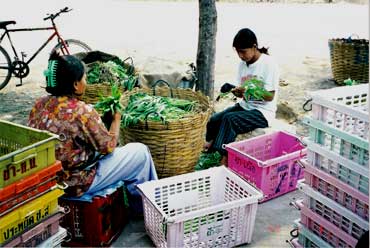 In recent years there has been considerable interest in improving the economic well being of smallholders by encouraging them to grow high-valued cash crops as part of value chain enterpriese that are intended to develop a total link between producer and consumer or at least the industrial processor. This would include such things as paprika in Malawi and Zambia, export specialty vegetables also in Zambia, or Pesticide Free Vegetables as depicted from Thailand. The question is: what is the real potential for shifting to high valued crops to make major inroads into the poverty of smallholder producers?
-
Read More About Value Chain for High Value Crops – High Risk? High Profit?
The answer lies in why these crops are high valued and to what extent they are either high risk crops or high quality sensitive crops. Also involved are the crops that the high- valued crops are replacing.
Since, as contended in other parts of this website, smallholders are most likely maxed out with the limited resources available to manage their land, the production of high-valued crops can only be accomplished by substituting the high-valued crops for something they are already producing. Thus the maximum benefit would be the price difference between the market value of the high-valued crops compared with the present crops, including the replacement purchase of any subsistence crops that were replaced.
Another concern is the high risk that can be associated with producing high-valued crops. An example would be the specialty vegetables crops AgriFlora is air freighting from Lusaka, Zambia to Europe. One of these crops is baby corn. For baby corn the harvest window is only one day between the tiny ears being immature and becoming over mature. Thus, if market opportunities for their smallholder cooperators are every three days, for every opportunity to market the baby corn and receive a high value there are two opportunities missed for which the price will be discounted or completely lost. As the quality can only be assessed in the packing shed where the small ears are removed from the husk there has to be some elaborate accounting system to keep track of each individual smallholder’s production as it moves through the packing shed to make certain each farmer get due credit for value of what is marketed, or the farm gate price has to be severely discounted to account for the packing shed discards hopefully destined for a animal feedlot. The ability to evaluate the quality of production only after it reached the packing shed leaves the farmers at the mercy of the company, and resulted in considerable contention among the farmers who continuously felt the value of their produce was being downgraded but for which they had no effective recourse.
Another risk factor with AgriFlora’s operation is that they have to book air space several days in advance either via commercial jets or charter planes. Once booked, there is little flexibility in the amount they can accept for shipment. If you book too much, you lose money, if you book too little, it might not be possible to expand you shipment to meet available produce. Thus, when more produce is received than space available the discards can only increase and include what would normally be market quality produce. Unfortunately, specialty crops, like all crops, are subject to weather variations which affect the time they will become available and totally outside the control of the producer, large or small. Ultimately, AgriFlora went bankrupt in late 2004.
Finally, there can be serious quality concerns. An example is paprika, which is used extensively as food coloring. Paprika has strict quality standards associated with the color and blemishes in the fruit, even when it is farm-dried and thus less perishable than the specialty vegetables that AgriFlora processed and marketed. Obtaining the best quality is closely associated with the care taken while growing the crop. This very quickly translates into commitment of labor and other operartional resources. If these are in Short Supply or restricted by Limited Diet it might be difficult for many smallholders to obtain the quality needed to command the best price and set up contention between buyer and producer over the price received.
Ultimately, encouraging the smallholder to shift to high-valued crops may have some potential for increasing their income and improving economic well-being, but it does require some sensitive, in-depth evaluations that recognize why the intended crops are high-valued, and that high-value does not always translate to high farm profit. When quality and market opportunities are not fully taken into account, smallholders can actually be severely hurt by the effort, regardless of how well intended.
Last Revised: 27 March 2010
Private Service Providers: Family Oriented, Fragmented Business Environment
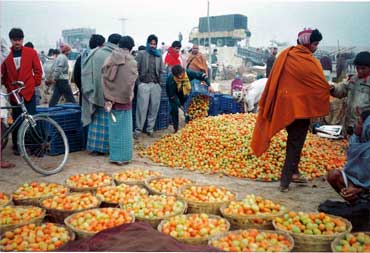 The support services in most direct contact with smallholders are the village based private service providers including private traders. These individuals are often condemned as being major exploiters of smallholders. Outwardly, when observing the tripling of tomato prices between the producers, such as those in the Terai of Nepal, and consumers in Katmandu, this appears justifiable. However, the traders are also members of the same community, friends and neighbors of the smallholders, and are providing essential services which may actually be the most cost effective service providers. They are still operating in a financially-suppressed economy in which there are few discretionary funds available. Even with the tripling of the retail price of tomatoes in Katmandu, the prices are still only 1/5th of the supermarket price in Fort Collins, Colorado.
See also: Private Service Providers: Preferred by Smallholders (ECHO Development Notes, Issue 127, April 2015, PDF).
-
Read More About Private Service Providers
The primary problem with the private traders is they operate in a highly fragmented business environment in which there are a large number of family enterprises doing similar activities with few businesses larger than what can be managed by a family assisted by only casual piecemeal laborers such as porters and repackers. The large number of individual family enterprises encourages competition between them for the services provided, and like competition everywhere provides a favorable environment for the producer and the consumers. However, the large number of businesses also means each business has only a limited market volume. For this reason, there are limits to how much these enterprises can discount their services due to competitive pressures and still make enough from their mark-ups to meet their modest living costs. An example would be the tomato marketing in Nepal as shown in the photo. These are the buying wholesalers in the Terai. They have a family member partner in wholesale market of Katmandu selling and distributing the tomatoes to the vendors scattered through Katmandu and who then sell directly to the consumers. Thus, two families are dependent on the one wholesale enterprise, a collecting wholesaler in the Teri and distributing wholesaler in Katmandu. The average daily volume per business is only 20 crates as shown in the middle of the photo with each crate holding approximately 28 kg of tomatoes.
Thus, what is the minimum mark-up on 20 crates or approximately 560 kg of tomatoes that will allow two families a modest living worth the risks involved in dealing with perishable commodities? The trucks shown in the background, which will transport the tomatoes on the 14 hour trip to Katmandu, hold 228 crates, representing a consolidation of up to 10 individual wholesalers. It was estimated that the two-family operation shown had incomes consistent with a mid-level civil servant. From the income perspective this is not really an exploitative situation.
For more details on the above case study for marketing tomatoes in Nepal click here. Also, for additional information on cost of remote transport click here.
Similar situations happen throughout the developing world and represents the typical steps in the value chain that separates producers from consumer or processors. The Talid Thai wholesale market north of Bangkok looks like a massive facility covering a couple square kilometers with four main warehouses. However, upon close analysis, it is all broken down into individual areas measuring 5 x 10 meters suitable for a small family enterprise. Each area is fully furnished with individual electric meters, phone service if not a cell phone, living room suite, and the enviable TV, as well as any equipment needed for sorting, grading or other processing of the produce being traded. The daily volume per enterprise is two or three pickup loads of produce, or about two tons. Normally both the husband and wife are in attendance with the wife holding the money and exerting overall managerial control. The husband, doing most of the work, is assisted by a number of casual porters to bring the produce in and delivering it to the buyers. The entire multitude of metropolitan Bangkok is served by a wholesale market of individual family enterprises.
In a basically impoverished society in which daily wages barely provide enough dietary energy to sustain a person and complete the work expected of them, there just maybe too much temptation for pilferage or passing off trash for produce that everything needs to be closely supervised by someone with vested interest in profit margin. That would be a family member.
The reason for this high level of fragmentation is not certain, but it could be a simple lack of trust in non-family members and experience with excessive pilfering when more than one family is involved. It is also possible that the high fragmentation and accompanying low market volume per enterprise could result in the private traders such as the Tomato Vender in Lusaka, Zambia or the Banana Trader in Uganda being as impoverished as the smallholder producers.
While the mark-ups may be high in order to provide the necessary income from limited market volume, the overall business overhead is kept low and thus could be the most cost effective service provider for smallholder communities.
The question remains, are these profit margins of private traders less than or greater than the overhead costs associated with operating cooperatives or public sector institutes? It must also be noted that with most of development efforts funneled through the civil service such as the Ministry of Agriculture, there may be some vested interest on the part of the host to condemn the private traders, in order to emphasize public sector support services. Have there been any studies that prove how exploitive or non-exploitive the private traders are? Perhaps the most exploitive service providers are the public sector organizations such as ADMARC in Malawi that allowed the private traders to increase their profit margins to be consistent with ADMARC’s overhead costs, to the disadvantage of both the smallholder producers and consumers. In Malawi private traders could easily move commodities from the furthest corner of the country to Blantyre, the commercial capital, for ADMARC’s buying – selling price differential. Is the cooperative business model through which the development community funnels assistance to the smallholder producers closer to the efficient private traders or the cumbersome public sector organizations?
Last Revised: 26 March 2010
-
Transportation Cost Estimate for Remote Areas
Transportation Cost Estimate for Remote Areas

In interviewing a former commodity trader/transporter in Zambia it was mentioned that she had to triple the ton/km freight charges when operating off the tarmac to reach remote communities. This appeared excessive but could actually be fairly transparently accounted for when considering the following issues:
- Smaller vehicle with less load capacity for off tarmac use.
- Tran-shipment of goods to or from the smaller vehicle somewhere near where the tarmac and unpaved roads meet.
- Warehouse space and storage costs to make the transfer.
- Additional fuel because the smaller vehicle is actually less fuel efficient on a ton/km basis.
- Additional time required to travel each km on unpaved road, increasing the labor costs.
- Additional number of trips to deliver or pick-up the same amount of commodities, again increasing the labor costs.
- Additional fuel required due to slower travel with more frequent braking, accelerating, etc.
- Additional frequency of repairs, from more bouncing around, adding wear and tear to the suspension, brakes, axles, etc.
- Are there other concerns?
Unfortunately these extra charges can only be charged to the smallholder producers as a discount on what they receive for their goods or a surcharge on what they have to pay for inputs. This is because once you reach or depart the tarmac, you are competing with those more fortunate in having a better transport infrastructure and thus cheaper costs.
Above: off-tarmac road serving smallholder communities in Indonesia.
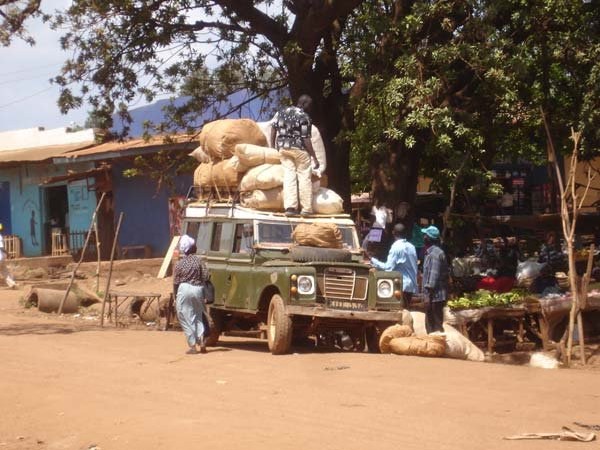
Overloaded Land Rover providing commercial transport services to a remote community in Kenya. How much extra will this cost the smallholders?
-
Marketing of Tomatoes in Nepal (book excerpt)
Excerpt from Chapter 4: Supporting Smallholders, Developing Smallholder Agriculture: A Global Perspective (R. L. Tinsley).
Marketing of Tomatoes in Nepal
An example of how family enterprise (private sector) supports smallholders, is the marketing of tomatoes from the Sharlahi District of the Terai in Nepal to the capital Katmandu (Manandhar, 1996). In Sharlahi, tomatoes are grown from September to April as a winter crop in rotation with summer crops of rice and maize. Tomatoes are normally handled by the private sector, even in countries with extensive state involvement in agriculture. They are a popular vegetable with a high demand among the general public.
In the middle of the season, the price the farmer in Sharlahi receives in the “haat bazaar”, a local bi-weekly farmers’ market where buyers can purchase produce from farmers for shipment to distant locations, is only one third what the consumer pays in Katmandu. This situation is fairly common and looks like an excessive profit margin for the middlemen. However, detailed analysis of marketing systems indicates only modest profits.
The biggest problem is a highly fragmented marketing system with a multitude of competing family enterprises, each with a rather small market volume so that the dealers have to compensate with higher mark-ups than in more developed economies where large companies handle larger volumes, with smaller overheads.
The marketing system in Nepal is actually fairly efficient, capable of delivering tomatoes from the farmers’ fields to the consumer in 48 to 60 hours. However, there are numerous steps in the marketing process, each with its handling costs and opportunity for spoilage losses. As in most Developing Countries’ marketing operations, the entire wholesale process is done by volume or sight without any weight checks. Weights only became involved for the final sale to retailer, or from retailers to customer.
The Marketing Process of Tomatoes in Nepal
The general marketing process is:
- Tomatoes are picked during the afternoon and transported from field to the homestead.
- In the evening the tomatoes are sorted and packed into small tokaries, a round bamboo basket holding 20–30 kg each, or dokoes, a bamboo backpack type basket holding 50–60 kg.
- Early the following morning, the tomatoes are transported from the homestead to the haat bazaar, a distance of up to 10 km. The haat bazaar is an open, muddy field with no facilities. Transportation is mostly by bullock cart holding 40 small tokaries for a total of approximately 1,000 kg, but representing the marketed produce of 1–5 individual smallholders who must accompany the bullock cart, walking beside it. The alternative is using backpack dokoes.
- Upon arrival in the bazaar, the tokaries and dokoes are placed on the ground for inspection by potential wholesale buyers (Photo 4.5).
- The buyers and growers haggle over the price until agreement is reached, normally for the full amount displayed by an individual grower. No weighing is done. The price depends on the number of wholesalers in the market and estimated demand based on phone calls from the one available public phone to the wholesaler’s partner in the wholesale market in Katmandu, a one-sided communication system in favor of the buyers. However, it still translates into a fairly equitable system, as buying remains highly competitive among the traders ensuring the farmers a fair share as will be discussed below.
- Once purchased, the tomatoes are dumped on ground clothes and the original containers are returned to the producer.
Photo 4.5: Tomatoes being displayed at haat bazaar in Nepal for auction by buyers. Photo credit: S. Manandhar.
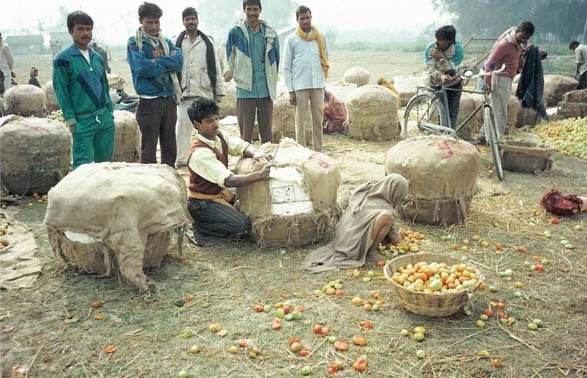
- The buyers then consolidate their purchases, co-mingling the tomatoes of different producers. Because the cool temperatures in Katmandu retard ripening, those destined for Katmandu have to be riper, and are thus more susceptible to compression spoilage, than those going to warmer destinations where they would naturally ripen. For this reason they would be repacked into rigid, stackable, plastic crates holding approximately 28 kg. Those going elsewhere are repacked into larger tokaries with extended sides that hold 80 kg or more (Photo 4.6).
- All sales in the haat bazaar are completed by noon, less than 24 hours after picking, and by mid-afternoon all tomatoes are ready for shipment. Tomatoes going to small towns are then loaded on the tops of buses for transport, or specially partitioned trucks. Those going to Katmandu are loaded into 6-ton trucks holding 228 plastic crates.
- As few wholesalers handle sufficient tomatoes for the entire truck, the loads are combined so that a truck can hold the produce of as many as 10 individual wholesalers, each handling 15–30 plastic crates, and representing the co-mingled produce of 20 or more individual smallholders.
- The various transport vehicles leave the haat bazaar 24 hours after picking, for the 14-hour trip to Katmandu or elsewhere. The trip is made primarily during the cool of the night, which reduces heat build-up in the confined unrefrigerated trucks and respiration losses associated with heat build-up. The arrival at the Katmandu wholesale market is early the following morning.
- Upon arrival at the Katmandu wholesale market, approximately 36 hours after picking, the crates are disaggregated to the respective partners of the buyers in the Sarlahi. In most cases, the partnership is among relatives. Thus, each wholesale operation supports two families, the collector’s family in Sharlahi and the distributor’s family in Katmandu. The Katmandu wholesalers are mostly specialized in the few crops they handle and the source from which they obtain them. Occasionally, they will obtain produce brought to the market on consignment from a driver representing a wholesaler without a destination partner.
- Like the haat bazaar in Sharlahi, the wholesale market in Katmandu is also an unpaved, muddy, open area on the outskirts of the city with no permanent facilities other than the market headquarters where wholesalers and truckers have to pay their usage fees.
- Retailers come to the wholesale market to purchase and transfer tomatoes and other vegetables to their respective stalls distributed throughout the city. These retailers’ purchases are frequently 5–10 kg of tomatoes and are consolidated with other vegetables. At this point, weighing is introduced into the system as an option.
- Transferring the vegetables to retail stalls depends on the distance, and the volume involved. It can be on the back using large dokoes, by bicycle, motor tricycle, or pickup, depending on the volume involved.
- Consumer sales commence as soon as the retailers return and open their stalls later in the morning and less than 48 hours after picking.
- After a day’s rest, the transporter returns to Sharlahi with the empty crates from the previous trip. On the return trip the transporters serve as courier for cash and any messages back to the buyers. Typically, drivers carry some US $4,000 on their return trips, which represents a minor security risk from bandits. However, this is minimized by the daytime travel. The Nepal banking system, at the time (1996), did not allow for alternatives.
Photo 4.6: Repacking tomatoes in the haat bazaar of Nepal for shipment. Photo credit: S. Manandhar.
Analysis of the Nepal Marketing System
Throughout the marketing process in Nepal there are costs associated with handling the crop in each step, as well as opportunities for additional spoilage losses. Actually, the losses are very reasonable. For the tomatoes going to Katmandu the total losses were only 21%. This was broken down to 7% spoilage losses in the haat bazaar, 7% in the Katmandu wholesale market, and 7% in the retail outlet. Even though no weights were taken in the first two operations, these losses were well-known and accurately estimated by all concerned. In addition to the spoilage losses there was a 4.5% respiration loss associated with picked tomatoes still being live organisms that continue their biological metabolism even after picking. As there are no weight checks being made, and the water loss did not noticeably reduce the turgidity of the tomatoes, these losses are largely unnoticed. The total losses were considerably less than the 50% traditionally associated with handling vegetables in developing countries (APO, 1989). Much of the reduction in spoilage losses can be associated with the shift from bamboo baskets to rigid and stackable plastic crates, at least for shipments to Katmandu.
The result of these losses is that, in order to market 100 kg of tomatoes to the consumer, the wholesaler must purchase 126 kg from the farmer, which essentially, and somewhat discreetly, increases the percentage of the consumer price the farmer actually receives.
Table 4.3. Marketing Cost Analysis for Delivering 100 Kilograms of Tomatoes to the Consumer in Kathmandu Item Weight Needed (kg) Unit Cost (US$)a No. Unitsb Cost / 100 kg Delivered (US$) Purchase Price 126 12.54 / 100 kg 1.26 15.06 7% weight adjustment for damages at haat bazaar 117 Shipping container (crate) 117 0.035 / crate 4.18 0.146 Packing material 117 0.016 / crate 4.18 0.068 Packing labor 117 0.032 / crate 4.18 0.135 Loading charge 117 0.032 / crate 4.18 0.135 Marketing tax 117 0.0485 / crate 4.18 0.203 Transportation cost 117 0.436 / crate 4.18 1.823 Unloading in Katmandu 117 0.0485 / crate 4.18 0.203 Market tax in Katmandu 117 0.0485 / crate 4.18 0.203 Misc. charges for road taxes, overload fines, etc. 117 0.032 / crate 4.18 0.135 Weight adjustment for respiration (4.8%) and damages (6%) 105 Porter fees to retail stall 105 0.009 / kg 105 0.945 Weight adjustment for losses at stall 100 Total cost 18.86 a Based on Dec/Jan average prices. All dollar values were converted from Nepal Rupees at US$ = 55.0 Rupees. b Assumes a plastic crate will hold 28 kg.
The actual cost incurred in marketing tomatoes from wholesale buyer to consumer amounts to $4 per 100 kg (Table 4.3). This can all be broken down into various charges including market and road taxes.
The biggest charge is for transportation amounting to almost 50% of the total non-farm cost. Individually the rest are very minor, but add up to a considerable cost.
In Sarlahi, the marketing costs remain fairly uniform throughout the season, while the prices fluctuate with supply and demand based on what is available in the market, what is being provided from other sources, and what is available from the farmers.
Typically, prices will be high in the beginning of the season, will go down as the production peaks, and goes up as production tails off toward the end of the season, or, as in the case of Sarlahi, farmers have to shift to their main summer crops of rice or maize.
The seasonal price fluctuations reflects the percentage of the final consumer price received by the different people involved (Table 4.4).
Table 4.4. Profit Margins for Marketing 100 kg of Tomatoes to Katmandu Consumersa – For the Producer Months Prod. Cost / 100 kg Selling Price / 100 kg kg Needed Total Received % of Consumer Price Profit Margin % of Consumer Price Oct./Nov. 4.13 32.58 126 41.05 63.54 35.85 55.50 Nov./Dec. 4.13 19.00 126 23.94 45.22 18.74 35.40 Dec./Jan.c 4.13 9.95 126 12.54 31.90 7.34 18.67 Jan./Feb. 4.13 10.41 126 13.12 43.81 7.92 26.77 Feb./Mar. 4.13 11.76 126 14.82 47.03 9.62 30.53 Table 4.4 (cont.) – For the Wholesaler Months Purchase Price Expenses Incurred kg Sold Selling Price / 100 kg Total Received Profit Margin % of Consumer Price Oct./Nov. 41.05 4.00 105 52.33 54.93 9.90 15.33 Nov./Dec. 23.94 4.00 105 35.13 36.89 8.96 16.91 Dec./Jan.c 12.54 4.00 105 21.56 22.64 6.10 15.52 Jan./Feb. 13.12 4.00 105 23.86 25.05 7.93 26.80 Feb./Mar. 19.62 4.00 105 27.24 28.60 9.78 31.04 Table 4.4 (cont.) – For the Retailer Months Purchase Price Expenses Selling Priceb Profit Margin % of Consumer Price Oct./Nov. 54.95 0.94 64.60 8.71 13.48 Nov./Dec. 36.89 0.94 52.94 15.11 28.54 Dec./Jan.c 22.64 0.94 39.31 15.73 40.02 Jan./Feb. 25.05 0.94 29.59 3.60 12.17 Feb./Mar. 28.60 0.94 31.51 1.97 6.25 a All monetary values are in US dollars converted from Nepalese Rupees at US$ = 55.0 Rupees. b This value is the basis for computing all % of consumer prices. c Dec./Jan. rows are the values used in Tables 4.3 and 4.5.
With all the losses factored in, the farmers actually receive anywhere from 31–63% of the consumer price, depending on when during the season the transaction occurred. This has to cover their cash cost estimated at US $4.13 per 100 kg with their profit margin representing returns to family labor.
This averages well above the 1/3 consumer price nominally claimed as their returns based on the apparent mid-season difference between haat bazaar and consumer prices. The producer thus enjoys the highest profit margin. Actually, most of the seasonal price fluctuation was accounted for in the fluctuations in the returns to the farmer.
The wholesalers, those normally considered exploitative of the smallholder, actually had the lowest profit margin in the study. Essentially they charge a near fixed price for the services they provide and are apparently not taking too much advantage of the seasonal price fluctuations.
The actual profit margin was only US $1.45 per crate to be divided between two families; the collecting wholesaler in Sarlahi, and the distributing wholesaler in Katmandu.
When the US $1.45 per crate was multiplied by the typical number of crates being handled, an estimate of the wholesalers’ income was obtained (Table 4.5).
This income was consistent with that of a mid-level civil servant. It provides the wholesaler with a comfortable but not exorbitant living, with considerably more risk than the corresponding civil servant.
Table 4.5. Estimated Income for Wholesalers (US$) No. Handled Income per Unit Daily Income Monthly Income (8 trips) Monthly Income per Family Plastic crates 20 1.45 29.00 232.00 116.00 30 1.45 43.50 348.00 174.00 40 1.45 58.00 464.00 232.00 50 1.45 72.50 580.00 290.00 Tokari 7 7.84 54.88 439.04 219.52 10 7.84 78.40 627.20 313.60 14 7.84 109.76 878.08 439.04 17 7.84 133.28 1,066.24 533.12 Comparison with Colorado, USA
In contrast to the above-described marketing procedure, Colorado Greenhouses Inc., which grows pesticide free, hydroponic tomatoes using surplus heat from various power generators in the State, packs tomatoes directly from the greenhouses’ packing shed into disposable cartons partitioned for individual tomatoes. The tomatoes are then dispatched via refrigerated 40-foot trailer trucks directly to wholesale distributors in distant cities and to retail supermarkets; all in one operation. Colorado Greenhouses can get tomatoes from the greenhouse to the retail counter in 24 hours, with at most one repackaging to consumer packs. They claim less than 1% spoilage loss and 3% respiration loss, with a total price mark-up from 50–100%. However, the consumer cost will be US $2.50/kg, or five times the consumer price in Nepal. The price difference reflecting the relative cost of production and living standards of developed and developing countries.
Lusaka Tomato Vendor
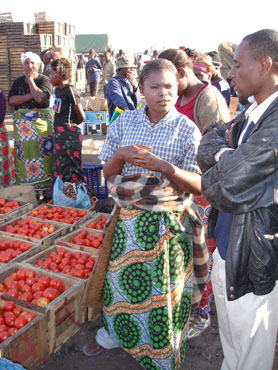 The young lady depicted in the Sweto wholesale market in Lusaka, Zambia is attempting to purchase two boxes of tomatoes for a total of approximately 50 Kg. She expects to pay ZK 45,000 (US$10.00)/box for total investment of ZK of 90,000 (US$20.00). She will then have to transport them approximately 1 km to the main market where she rented a small stall. She hopes to sell them for ZK 55,000/box. This represents a sizable 22% markup but provides her a gross profit of only ZK 20,000 US$ 4.44), which when she deducts her expenses of stall rental and porter cost will give net days profit of ZK 15,000 (US$ 3.30). If she has more than two dependents to support she will fall below the international poverty standard of US$ 1.00 per day.
| Item | Zambia Kwacha | US$ | US$/Kg |
|---|---|---|---|
| Market Volume | 50 kg | ||
| Purchase Price | 90,000 | 20 | 0.40 |
| Selling Price | 110,000 | 24.44 | 0.48 |
| % Mark-up | 22.2 | 22.2 | |
| Gross Profit | 20,000 | 4.44 | 0.08 |
| Estimated Profit | 15,000 | 3.33 | 0.07 |
Retail cost for kg of tomatoes in US = $2.20. Ratio: 0.48 / 2.20 = 0.21 economic suppression index for Zambia
In evaluating private traders it is often not only necessary to look at the percent markup but also consider the market volume and total income. By condemning private traders it is possible to be condemning people who are as deeply impoverished as the smallholder producers they are supposed to be exploiting. Another example would be a Banana Trader in Uganda working from a bicycle.
Last Revised: 5 Sept. 2005
Uganda Banana Trader – Double Marathon Man
T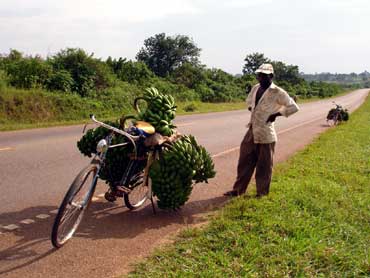 he banana trader with his bicycle as depicted started out at 6:00 am and traveled some 40 km from his home town to the producer village and purchased approximately 100 kg of cooking bananas for USh 15,000 (US$8.82). He has then returned the same 40 km often pushing the overloaded bicycle up the hills. This is a total trip of some 80 km or the equivalent of two marathons. He then hopes to sell the bananas for USh 25,000 (US$14.70) but may have to settle for on USh 20,000 (US$11.76) and arrive home hopefully before 8:00 pm after an arduous nearly 14 hour day. If he receives the desire selling price his markup will represent some 60% of the purchase price and 40% of the selling price. Even then his income will be only US$6.00. Given he has to support a wife and four
| Item | Uganda Shillings | US$ | US$/kg |
|---|---|---|---|
| Market Volume | 100 kg | ||
| Purchase price | 15,000 | 8.82 | 0.09 |
| Selling Price | 25,000 | 14.7 | 0.15 |
| % Mark-up | 60 | ||
| Days Income | 10,000 | 5.88 | 0.06 |
Retail cost of cooking bananas in US = $2.84/kg. Ratio: 0.15 / 2.84 = 0.06 as the economic suppression index for Uganda
children his best price will still place him right on the international poverty standard of US$1.00/person/day. His market conditions are summarized in the table below along with the current retail price of cooking bananas in the US, which is some 19 times the Uganda consumer price and represents the degree of financial suppression of the Uganda economy relative to the US economy.
Is this apparently excessive markup an exploitation of the smallholders or the result of a highly fragmented business environment? In evaluating private traders serving smallholder communities is it necessary not only to look at markup, but also the total market volume and final income of the trader before making any judgments as to how exploitive the traders are of the smallholders?
A similar situation can exist with Tomato Vendors in Lusaka, Zambia.
Last Revised: 5 Sept. 2005